Born from Necessity: Inside Sabah’s Journey to Launch Rent Flair
How a desperate search for sustainable modest fashion sparked a marketplace with a deeper mission.
Written by Sabah Hussain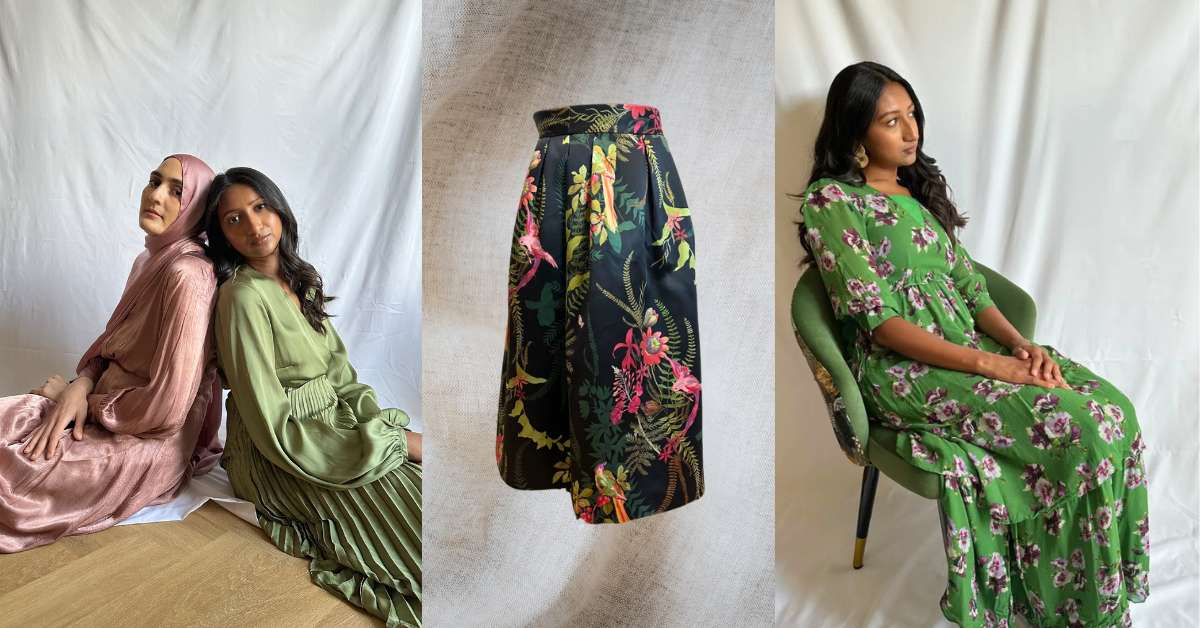
It’s a problem women have encountered for centuries. You want to wear something fabulous for an event, without breaking the bank. This tension led me to found Rent Flair, a modest fashion marketplace for pre-loved clothing in the UK.
Rent Flair’s origin story began when I attended my first black-tie gala. I had that ever-so-familiar creeping feeling of not wanting to wear something Instagram had already seen. Which is laughable, but honest. As I’ve been pivoting towards more sustainable lifestyle practices over the past few years, renting a dress seemed like the most viable option. What I expected to be a swift, seamless process turned out to be time-consuming and disheartening. After scrolling for hours for a modest dress I could rent, I finally settled on something beautiful—that still wasn’t quite right.
A Frankenstein Affair
Getting dressed for the gala felt Frankenstein-esque, because much like Dr. Frankenstein’s infamous creature, my outfit was bundled together from spare parts—a bandeau doing the work of a neckline, a shawl impersonating a sleeve, gloves filling in the gaps, all to achieve the coverage I felt comfortable with, to make the dress feel more modest and more me. I adored the look in the end, but getting there was a frustrating process that forced me to reflect on how so many other women in the UK must grapple with finding affordable modest fashion options that are also kind to the planet, the crucial point being both affordable and sustainable.
The Sheins and Boohoos of the world have dominated conversations around low-cost fashion, and if some credit has to be given to them (if we truly have to), they have made modest fashion more accessible. But at what cost?
The fashion industry accounts for around 10% of carbon emissions, and 85% of textiles are discarded annually. With global warming escalating in such visible ways across the world, like the extinction of some of the world’s most beautiful animals due to rising temperatures, wildfires across the US, floods across the globe, and especially in the global South, this should be data that makes us shudder. There’s more than enough clothing to go around, so why are we always resorting to new?
Creating sustainable options and community
Rent Flair was born out of these pressing needs and fears. It’s a platform where women can buy, sell, rent, and lend pre-loved modest fashion. Somewhere that encourages women to re-wear and re-love modest fashion, rather than let it gather dust at the back of a wardrobe, or worse, end up in a landfill when we no longer deem it usable.
“I’ve spent a lot of effort finding modest dresses and even altering dresses for more coverage, so it’s nice to find somewhere my clothes can be used by other people with the same struggles.”
When a piece no longer fits us or our lives, we bag it up for charity and call it a day. But the truth is, charity shops are overwhelmed, and a staggering amount of donated clothing still ends up incinerated, shipped abroad, or buried. Rent Flair offers a different kind of afterlife—one where your beloved abaya, that occasion dress you wore once, or the maxi skirt that no longer suits your style, finds its way to another woman who’ll genuinely treasure it. And as a bonus, you make a little money along the way. Both the circular fashion industry and the modest fashion industry are at an inflection point, and to me, Rent Flair is the marriage between the two. In the circular fashion industry, resale, rental, and re-wear are now driving some of the most exciting conversations in fashion as brands move to incorporate circularity.
Modest fashion has had its own quiet revolution: once overlooked by mainstream brands, it’s now one of the fastest-growing segments globally, with women demanding more variety, more quality, and more design integrity. It’s shaking off the assumption that it’s plain, dated, or strictly religious. Both movements are powered by the same underlying shift: women wanting to dress with intention, not just for consumption.
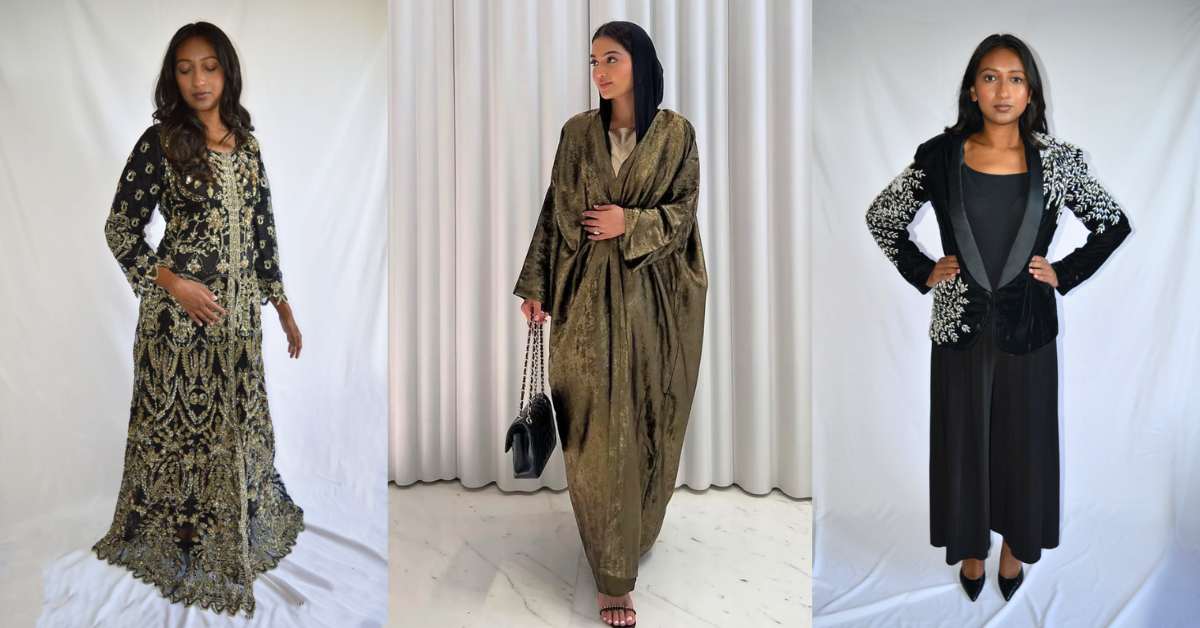
Outfits available on Rent Flair.
Romana, a social impact manager and mother of two from West London, says, “I’ve spent a lot of effort finding modest dresses and even altering dresses for more coverage, so it’s nice to find somewhere my clothes can be used by other people with the same struggles.”
Building this business has been anything but easy
The world of tech and business is entirely foreign to me. With a background in journalism and human rights, starting a tech startup with as much understanding of software development as I have of making balloon animals (i.e. none) was a terrifying prospect, but thankfully, I thrive on healthy doses of delusion and manifestation.
I set about finding a developer back in 2024, but unfortunately found out the hard way that choosing a random candidate without the appropriate checks and balances can break your business, which it did, temporarily. I worked with a developer for about four months, pouring money and time into this relationship, only for the developer to get blocked on Upwork, a freelance-finding platform, for fraudulent behavior. I never found out what this meant, but four months of resources, energy and intellectual property disappeared overnight. I was furious with the developer, but even angrier with myself for not taking contact details from the developer, signing contracts, and asking for references. I learned the painful way that due diligence is everything.
Thankfully, my relationship with my current developer has been much more successful. They bring my ideas to life. It takes a lot of tweaking, but no business is ever really finished.
Plus, balancing a day job with building a business from scratch is exactly as chaotic as it sounds. At the beginning, it meant working late into the evenings on tasks I thought would move the needle, and for a long time, I couldn’t find my rhythm, but once you do something long enough, you find out what works, which is something only practice will teach you.
For me, that rhythm means working early in the morning before my day job, working on weekends, and still sometimes, yes, late into the evening. It’s not glamorous in the slightest, despite what social media tells you about startup life, but it’s what reality looks like.
Bootstrapping also means financial sacrifices that nobody really warns you about. Every decision carries weight when it’s your own money on the line, and I’ve thrown so much money away on “nice to haves” like paying for feedback and expensive subscriptions, when those financial decisions should have been made when the business had more money in the bank.
Networking threw up its own unexpected challenge. Sustainable fashion conversations often happen in spaces centered around alcohol, which, as a Muslim woman, made those environments difficult to navigate. But then I found my people—women founders events and Muslim founders communities—and suddenly networking didn’t feel like a chore.
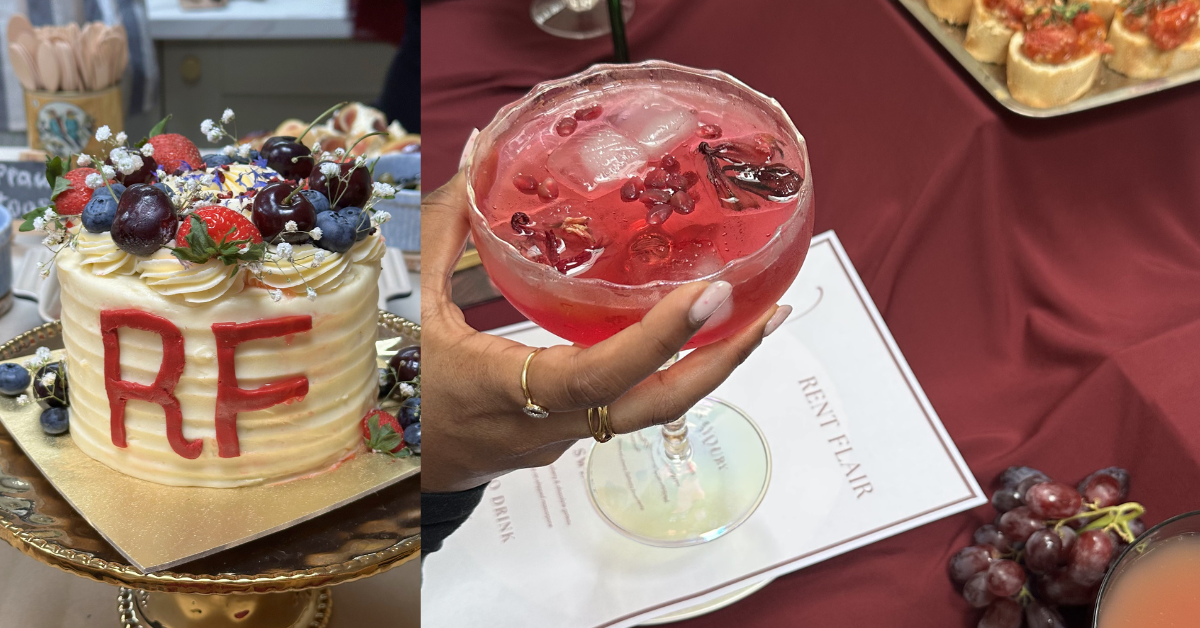
A gathering celebrating the launch of Rent Flair.
I’ve leaned into the channels where my community already lives—Instagram, word of mouth, and conversations at the events and gatherings where modest fashion is most visible. I wanted Rent Flair to feel less like a platform being launched at women and more like a space being built with them. A lot of the early outreach has been founder-led storytelling: sharing why I built it, what I struggled with, and inviting other women to see themselves in that journey.
There’s also a deeper intention behind Rent Flair. I’m a second-generation Bangladeshi immigrant. In the community I come from, women of my mother’s generation are too often left disenfranchised and powerless due to the patriarchal structures that govern our realities. Women are battling devastating domestic situations without any financial means to leave them. Unfortunately, money so often equals power. I want Rent Flair to offer something to women in that position: to empower women like this to be able to take ownership of the assets they do have, whether they be gifted clothes, their wedding outfits, or occasion pieces, and earn from lending or selling them.
This vision is inseparable from community. Samaah, a finance professional, captures it well: “Aside from being a timely and thoughtful response to how fashion is evolving, Rent Flair stands out for its sense of community, driven by its mission to make fashion more inclusive, conscious and connected.”
That, in the end, is the heart of Rent Flair. What began as one frustrating day piecing together a gala look has become something far bigger: a space for the modest fashion community, where dressing well and doing good are no longer in conflict.
You can find Rent Flair at rent-flair.com or @rent_flair on socials.
All images courtesy of the author.
Sabah Hussain is the founder of Rent Flair, a UK-based modest fashion marketplace for pre-loved clothing, where women can buy, sell, rent and lend modest fashion. Sabah believes in making modest fashion more circular and sustainable. In her day job, she works for an international human rights NGO that advocates against harmful counter-terrorism legislation, leading a small team and providing immigration advice. In her spare time, she can be found cooking and hosting her loved ones.