A New Era for Modesty: American Muslim Designers’ Historic Debut at NYFW
Modest fashion has been represented in bits and pieces at New York Fashion Week over the years. However, this weekend marked a new chapter in that legacy as the first official NYFW segment dedicated to the movement took place. The show for the FW2026 season, curated by Modest Now and Muslimi, spotlighted two distinct American Muslim designers writing their stories in the modest space: the refined elegance of Maryam Amaria’s label, Amariah, and the spiritually infused streetwear of Islam Mohamed El-Hoseiny’s Athari Wear.
Minutes before showtime, the sunlit venue hummed with the energy of a diverse crowd—editors, content creators and modest fashion influencers gathered alongside those curious about the niche. Throughout the room, guests expressed their own takes on modesty: generational garments and meticulously draped abayas sat alongside hijabs styled as chignon buns and edgier looks featuring leather, chains and all-black palettes. The message in the room was clear: there is no single definition of modesty.
AMARIAH: THE EID EDIT
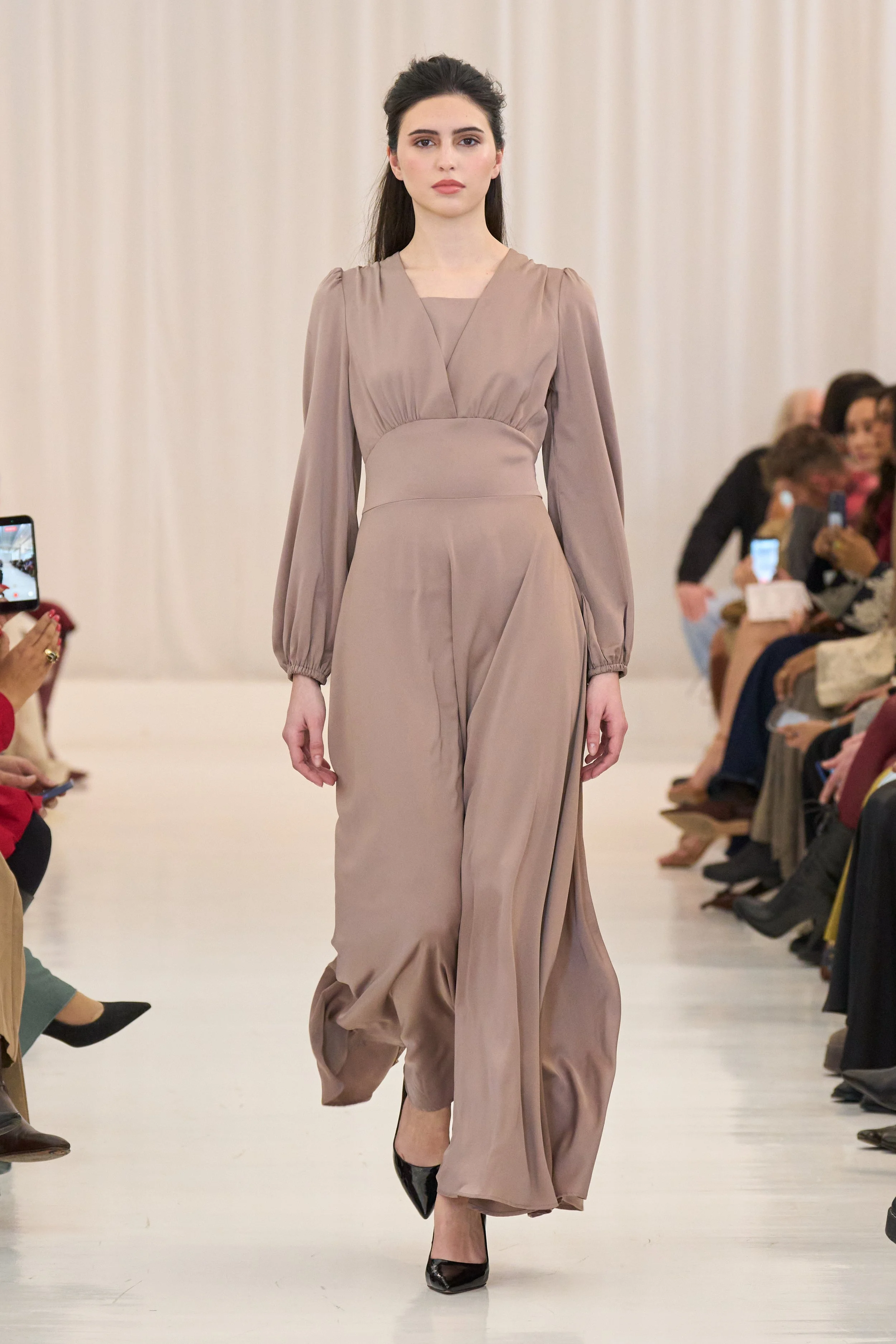
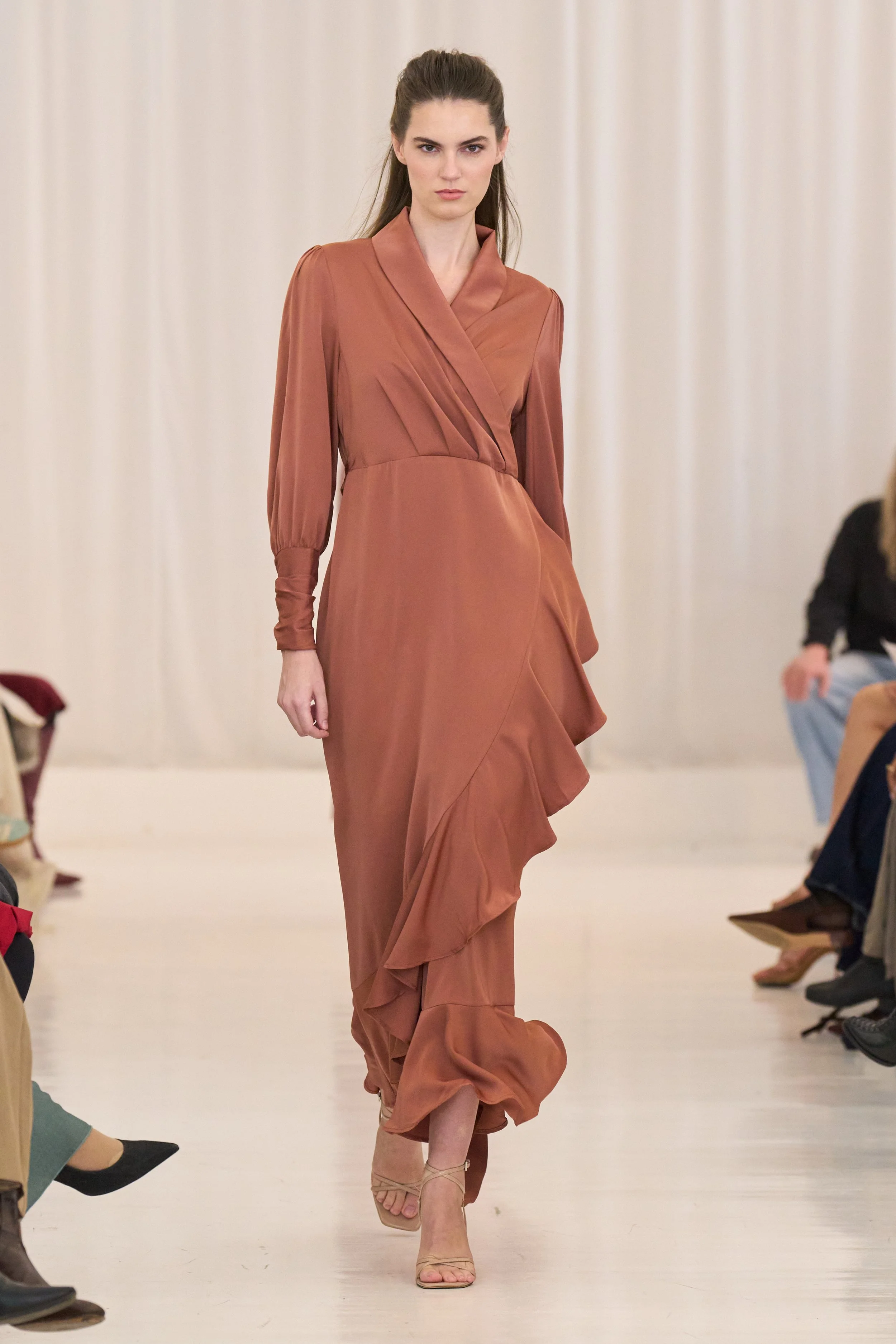
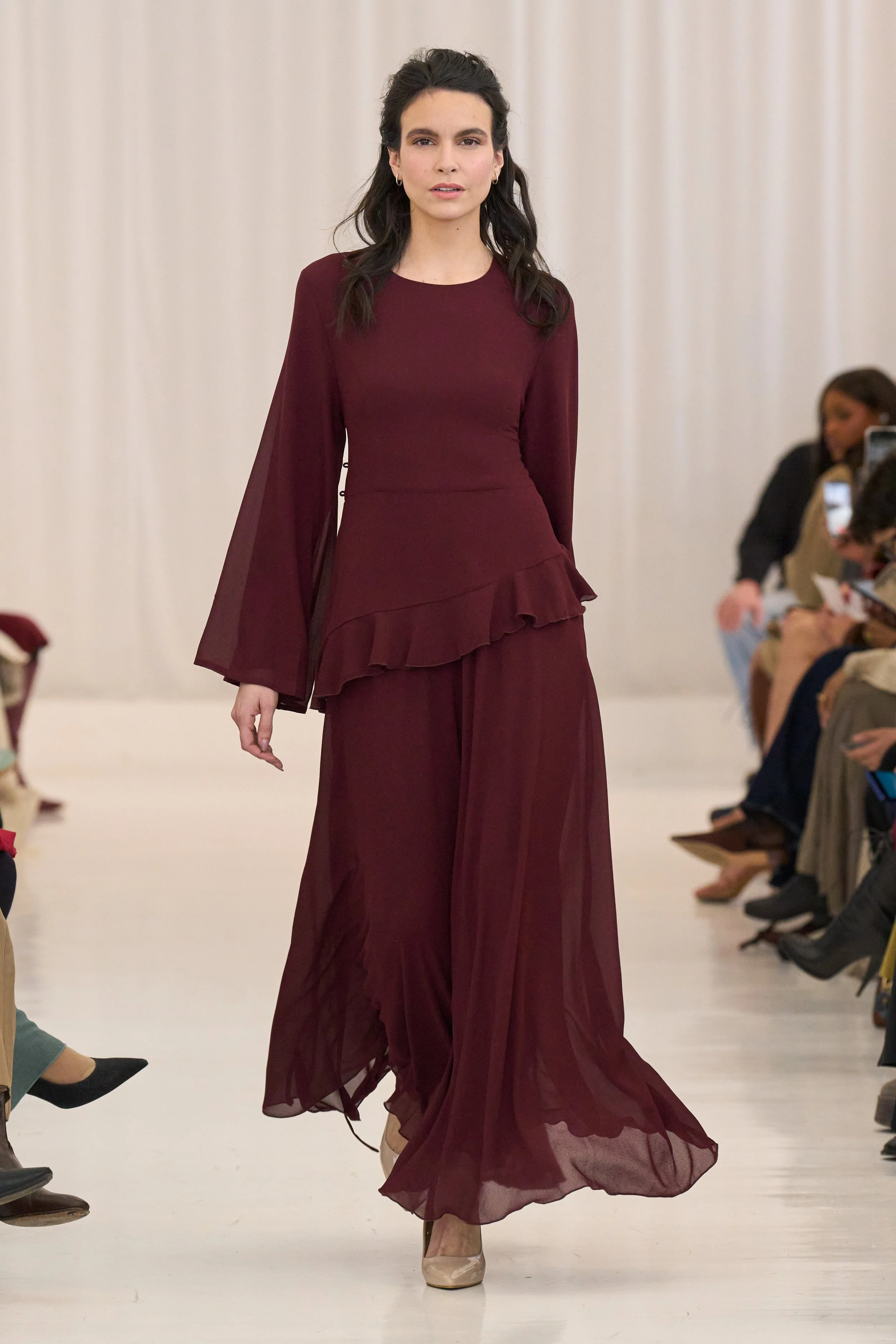
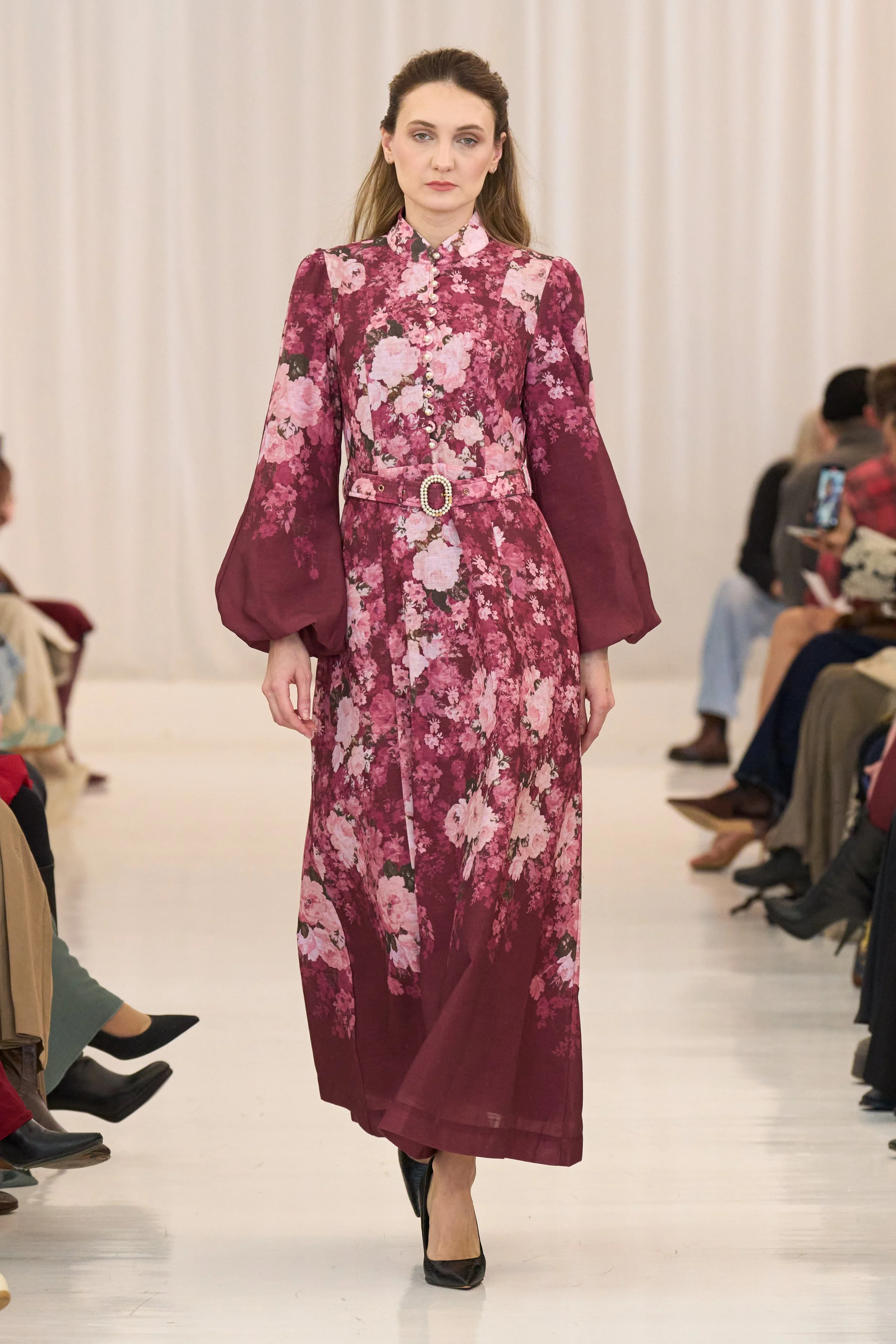
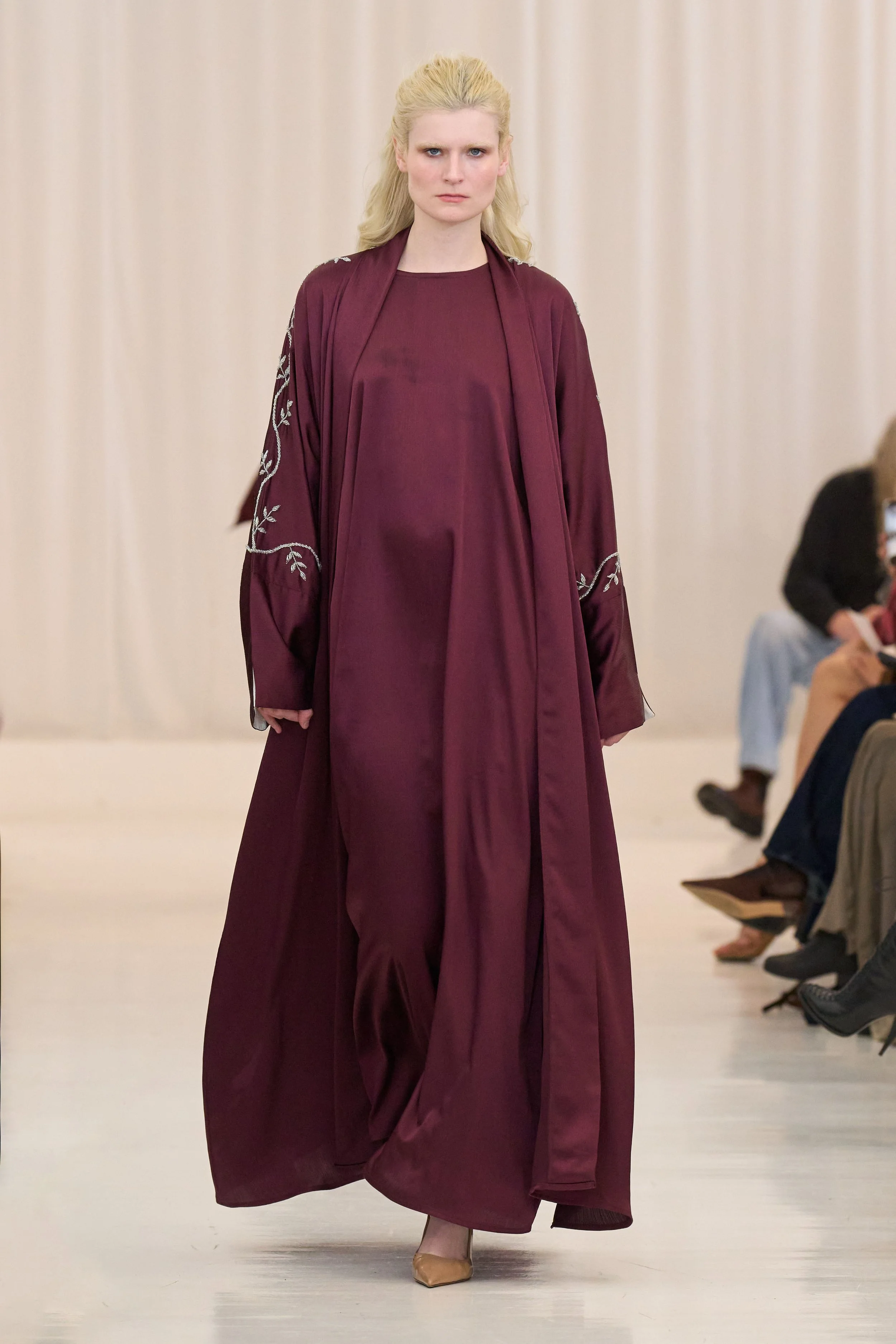
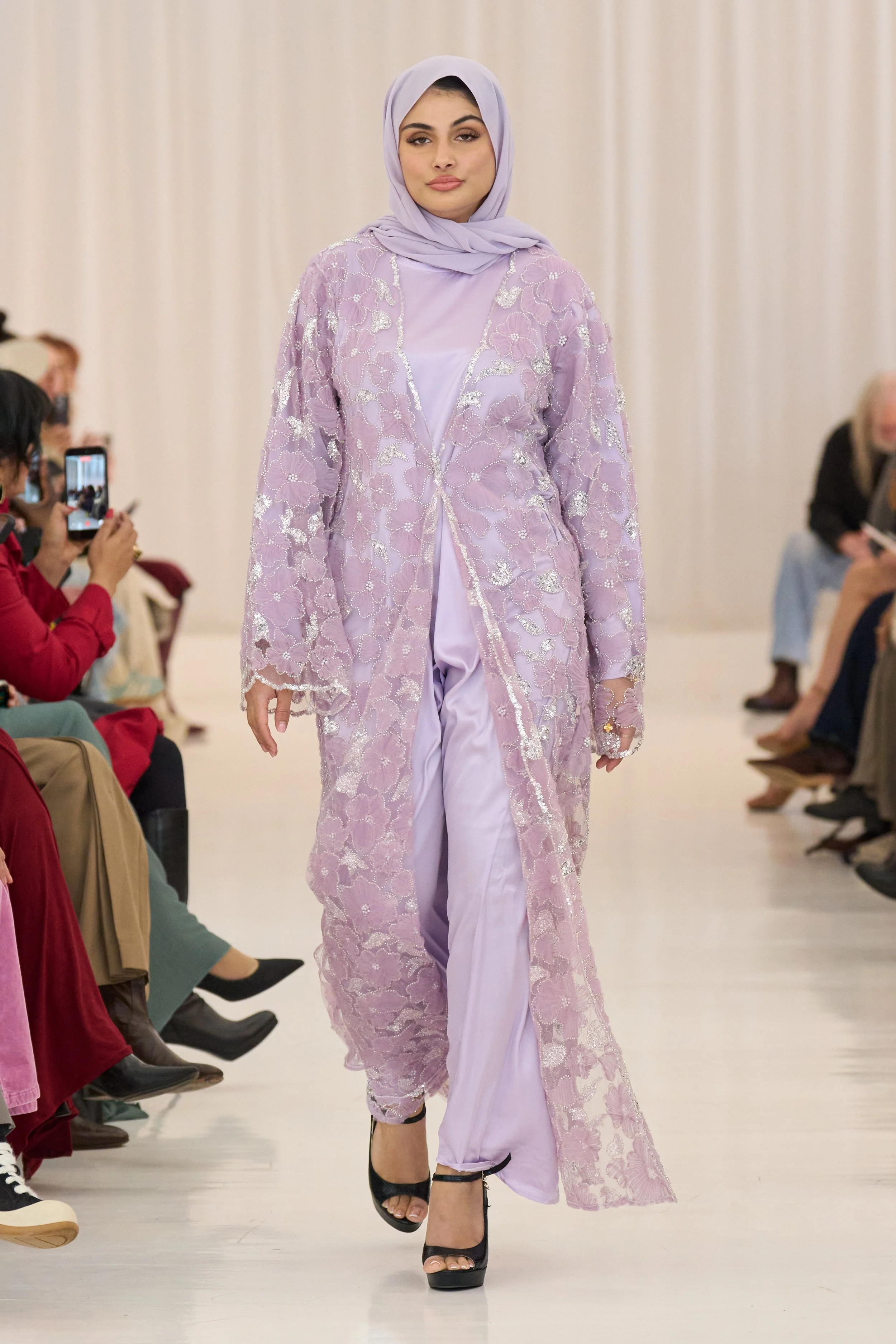
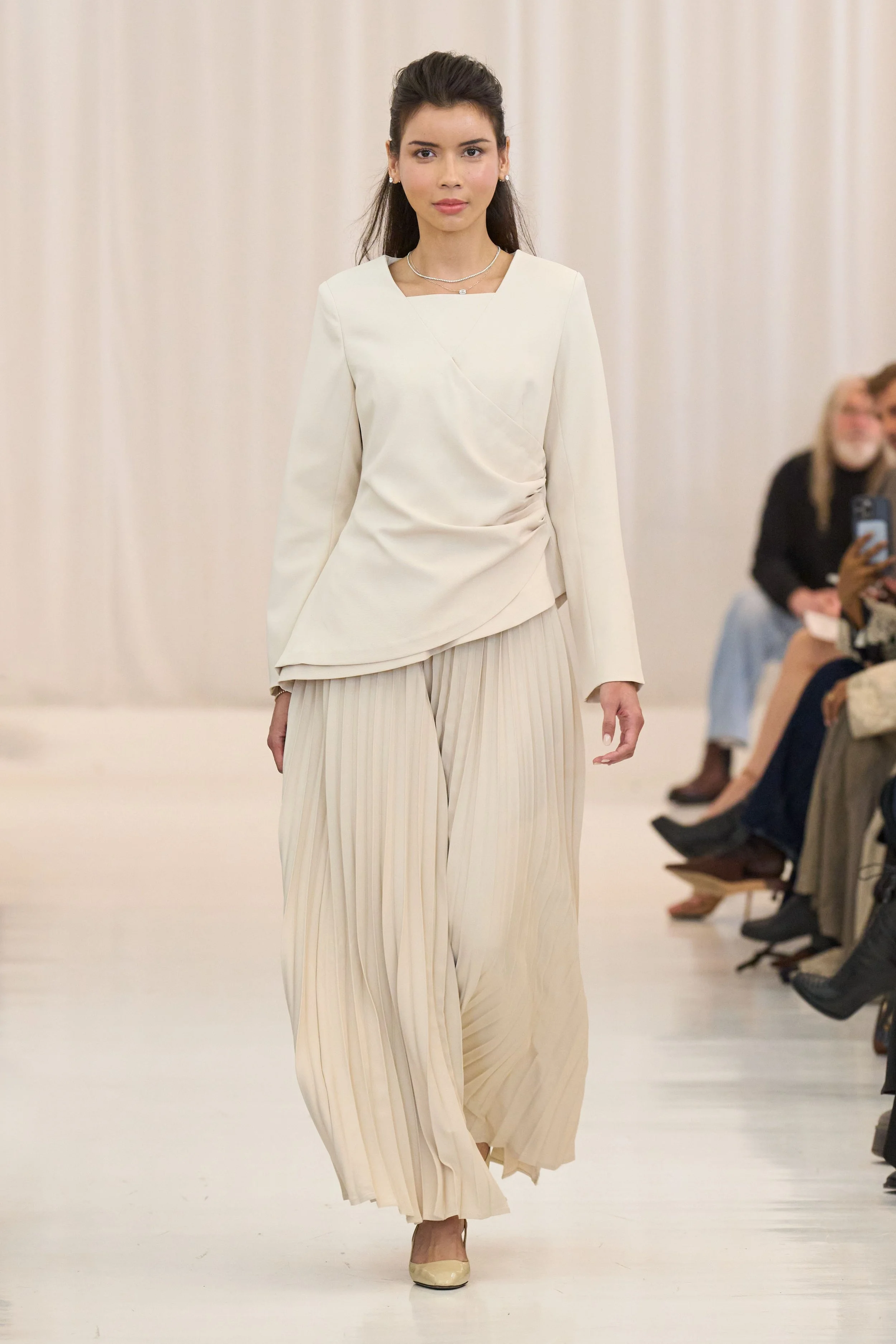
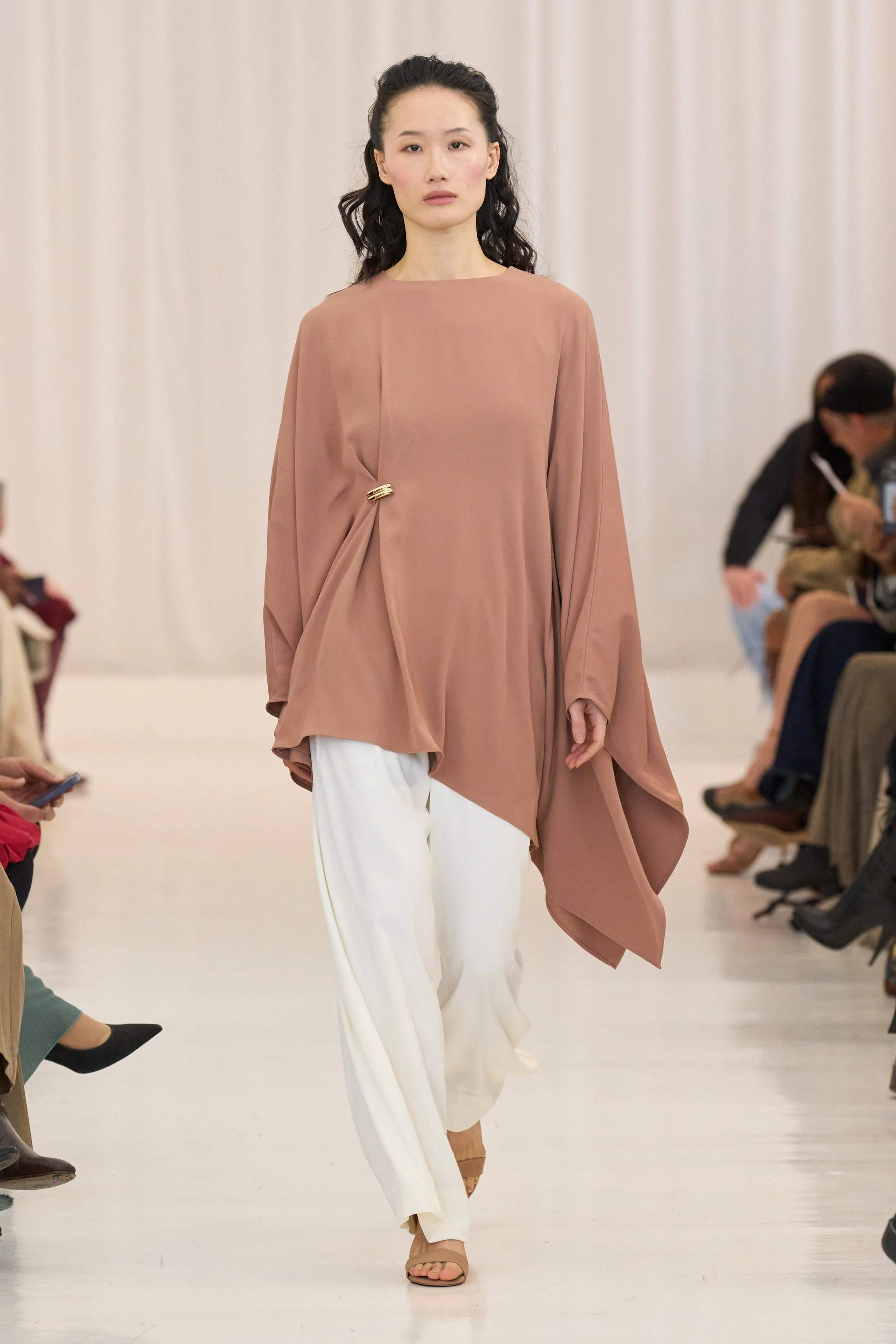
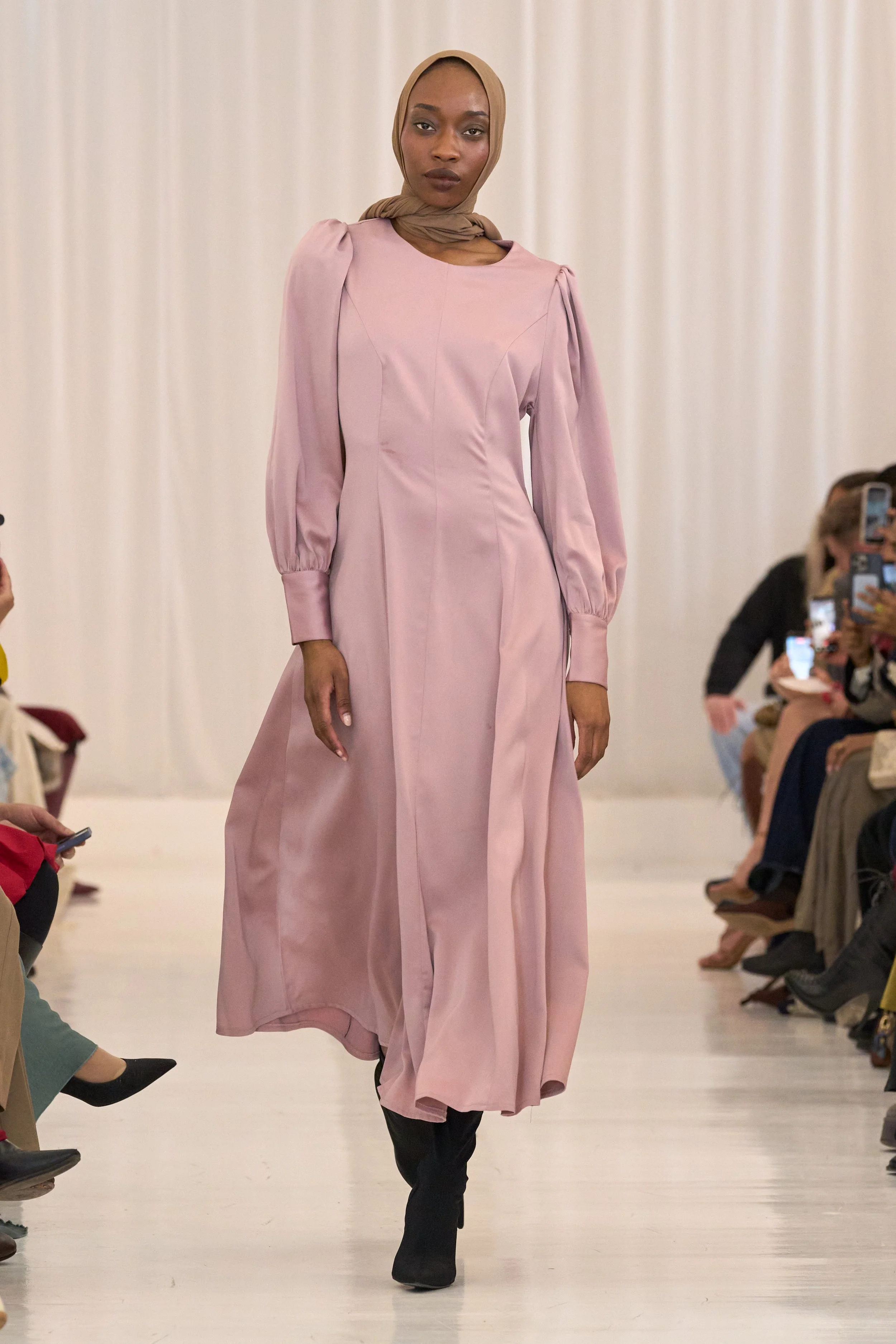
The show opened with Amariah presenting an Eid collection of 10 looks inspired by travels across the SWANA region (Southwest Asia and North Africa). Flowing silhouettes in jewel tones graced the runway, defined by expertly tailored princess seams that offered structure without compromising modesty.
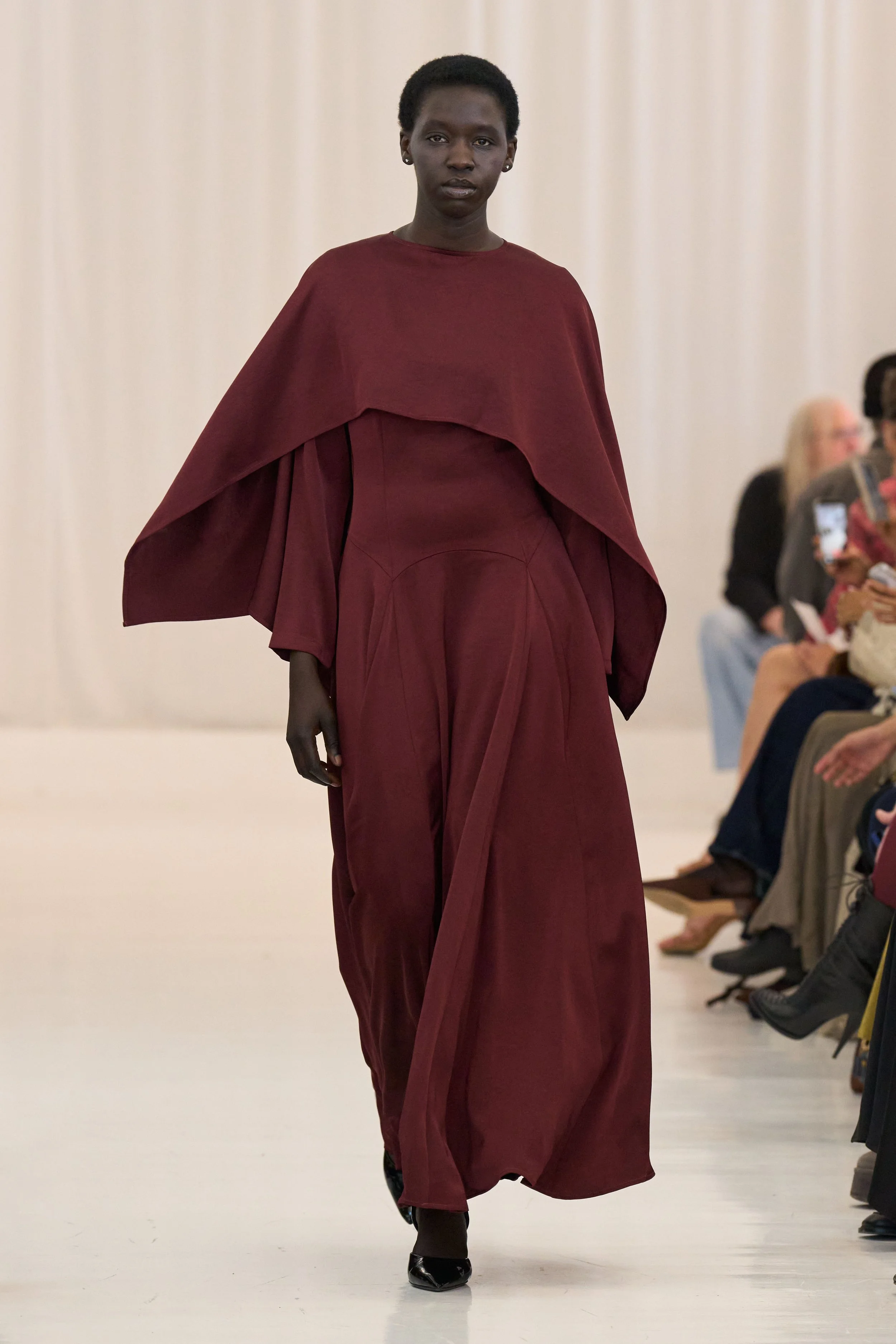
The collection featured elegant draping, asymmetrical cuts, and delicate ruffled and ruched details. A standout was the two-piece maxi dress in a striking maroon, paired with a matching capelet. Amariah has risen to prominence in the modest space by using fabrics with presence, such as silk, lace and satin.
Their structured tailoring and subtle details make these garments ideal as standalone pieces or as sophisticated bases for layering. Opening the show with such classic silhouettes provided an intentional, graceful contrast to the brand that followed.
ATHARI WEAR: STREETWEAR WITH A SOUL
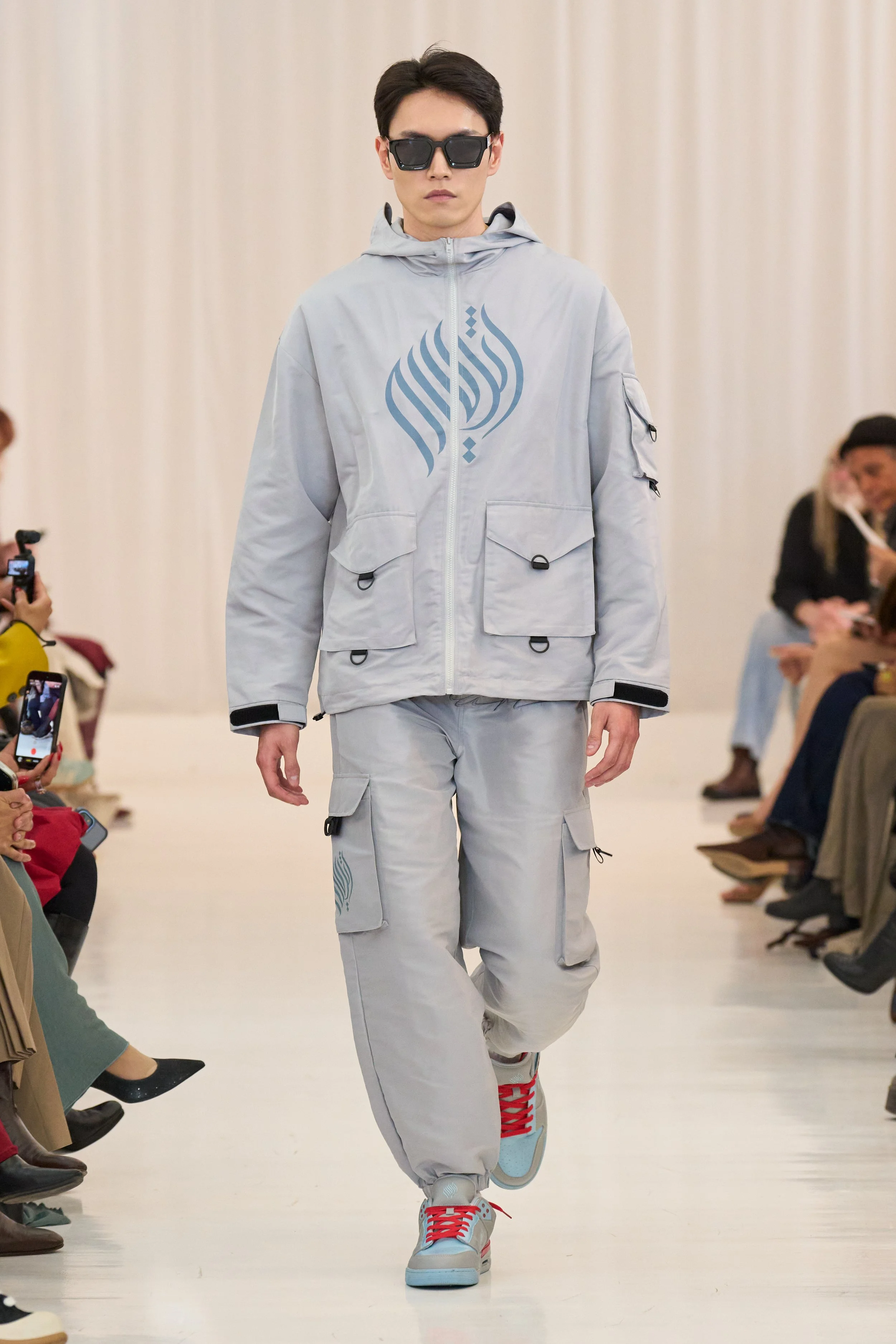
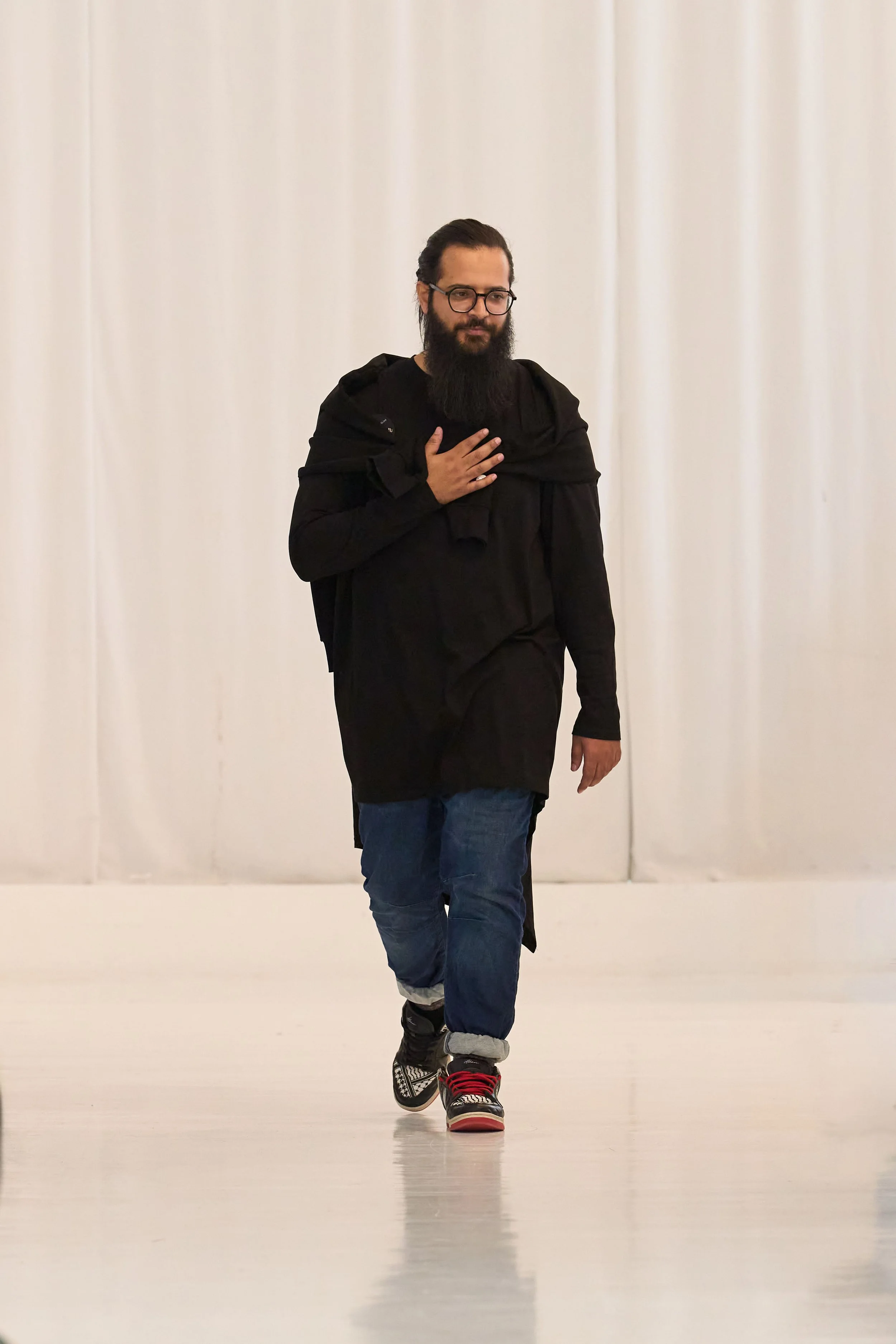
Athari Wear shifted the energy, opening with a custom soundscape of the designer’s voice layered over spiritually inspired vocalizations. Phrases like “Wear your story with us” and “Let your clothing speak for you” established the brand’s ethos. This was streetwear as a powerful fashion statement, putting Palestine at the forefront of the narrative.
Utilitarian details like cargo pockets and buttons suggested multifunctionality. Traditional thobes were reimagined with spliced panels of keffiyeh and geometric prints; one standout featured a striking map-silhouette of Palestine applied directly to the garment’s front as a powerful reclamation of identity.
The collection introduced a “thobe hoodie,” a fusion of traditional and modern styles adorned with the brand’s calligraphic logo. Specific looks also showcased Athari Wear’s iconic sneakers in various colorways.
Cultural homages were woven throughout, including an ochre crewneck honoring Malcolm X and boxing imagery representing Muhammad Ali, both prominent Muslim figures who actively spoke out against injustice.
The look that commanded the most attention was a blue two-piece set designed to mirror the press jackets worn by journalists in Gaza. The front read: “In solidarity with Palestinian journalists.”
Other standouts were a houndstooth coat reimagined as a keffiyeh print and a cropped double-breasted blazer. While the collection is inherently unisex, seeing these silhouettes styled on women would have further underscored the brand’s versatile appeal within the modest market.
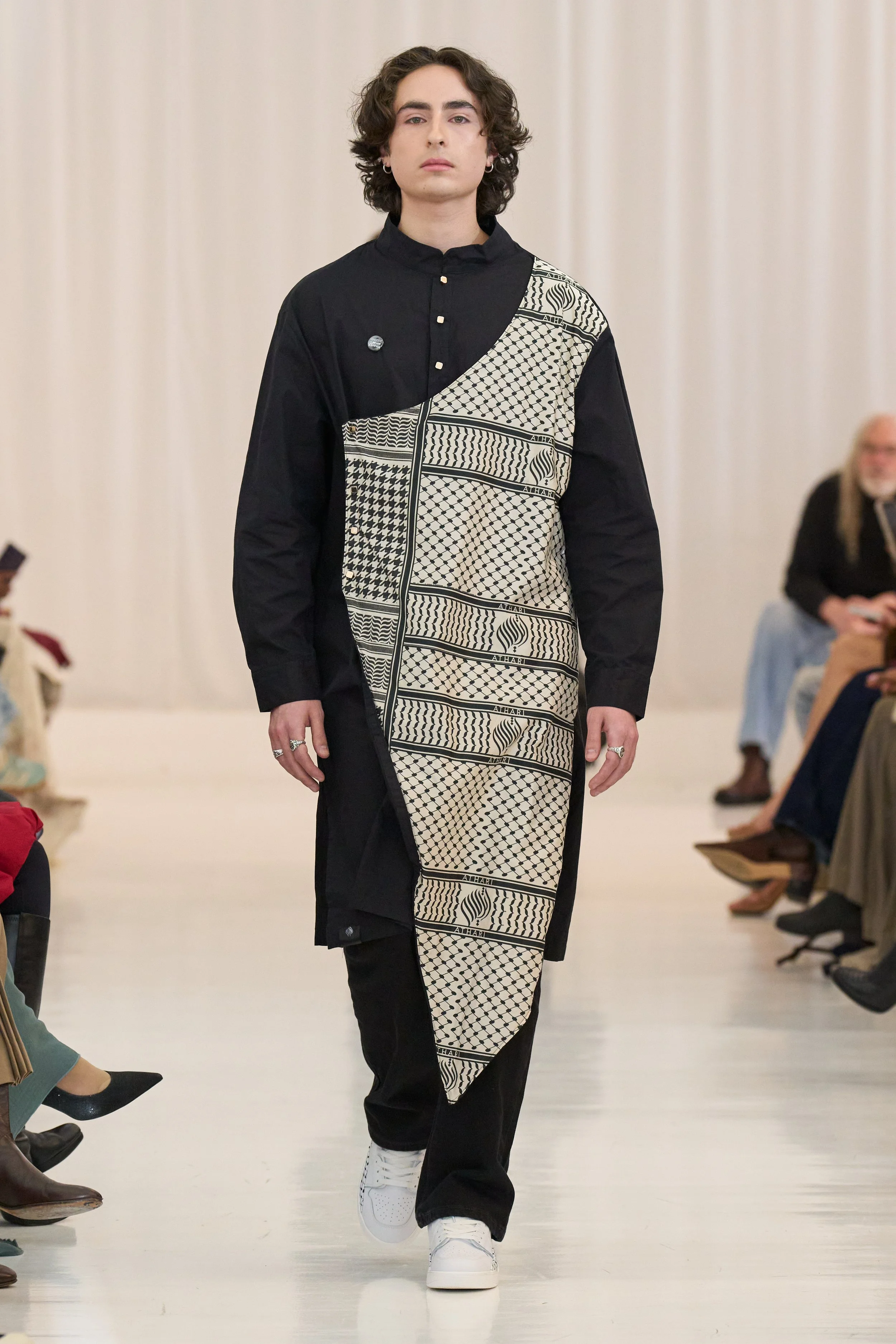
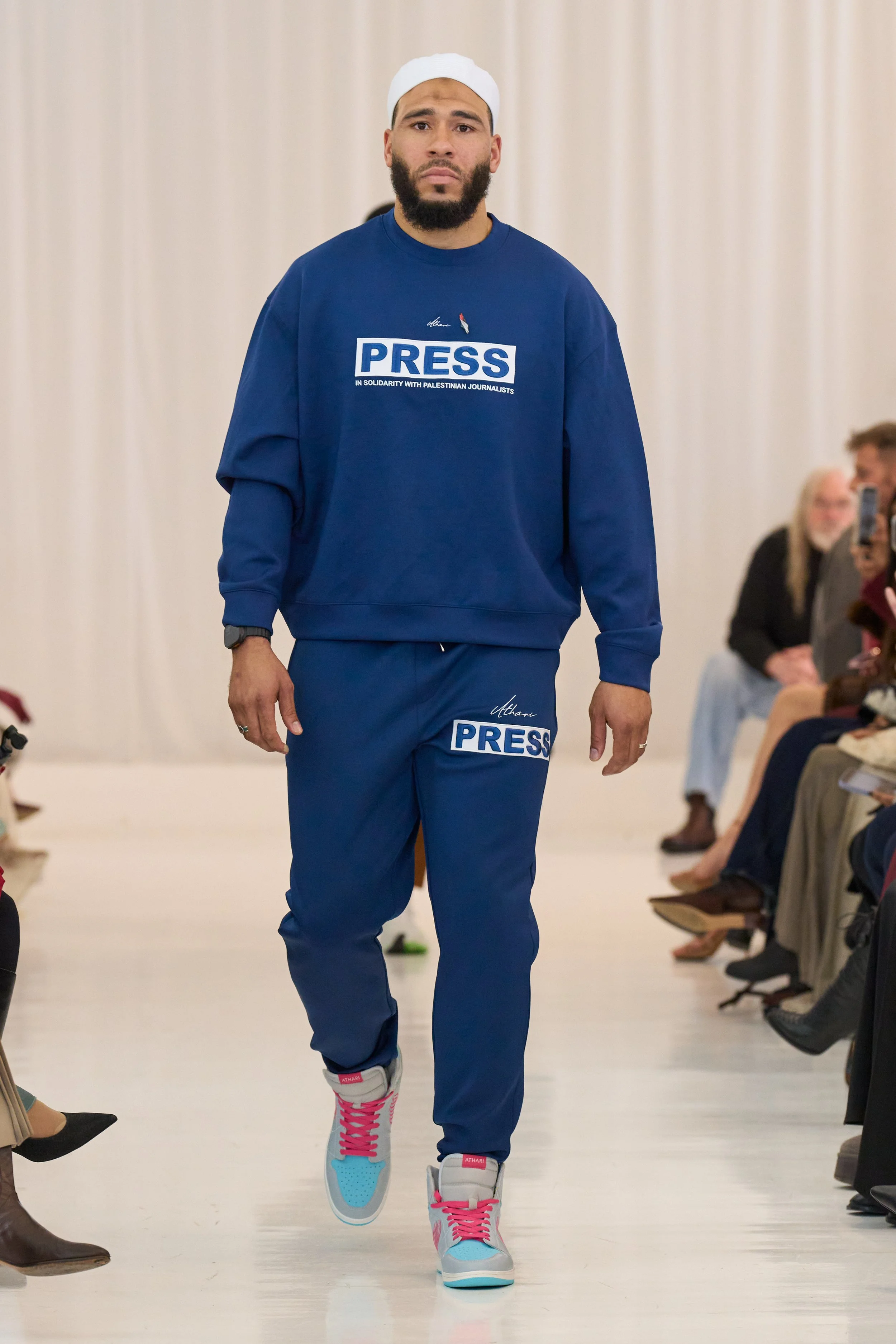
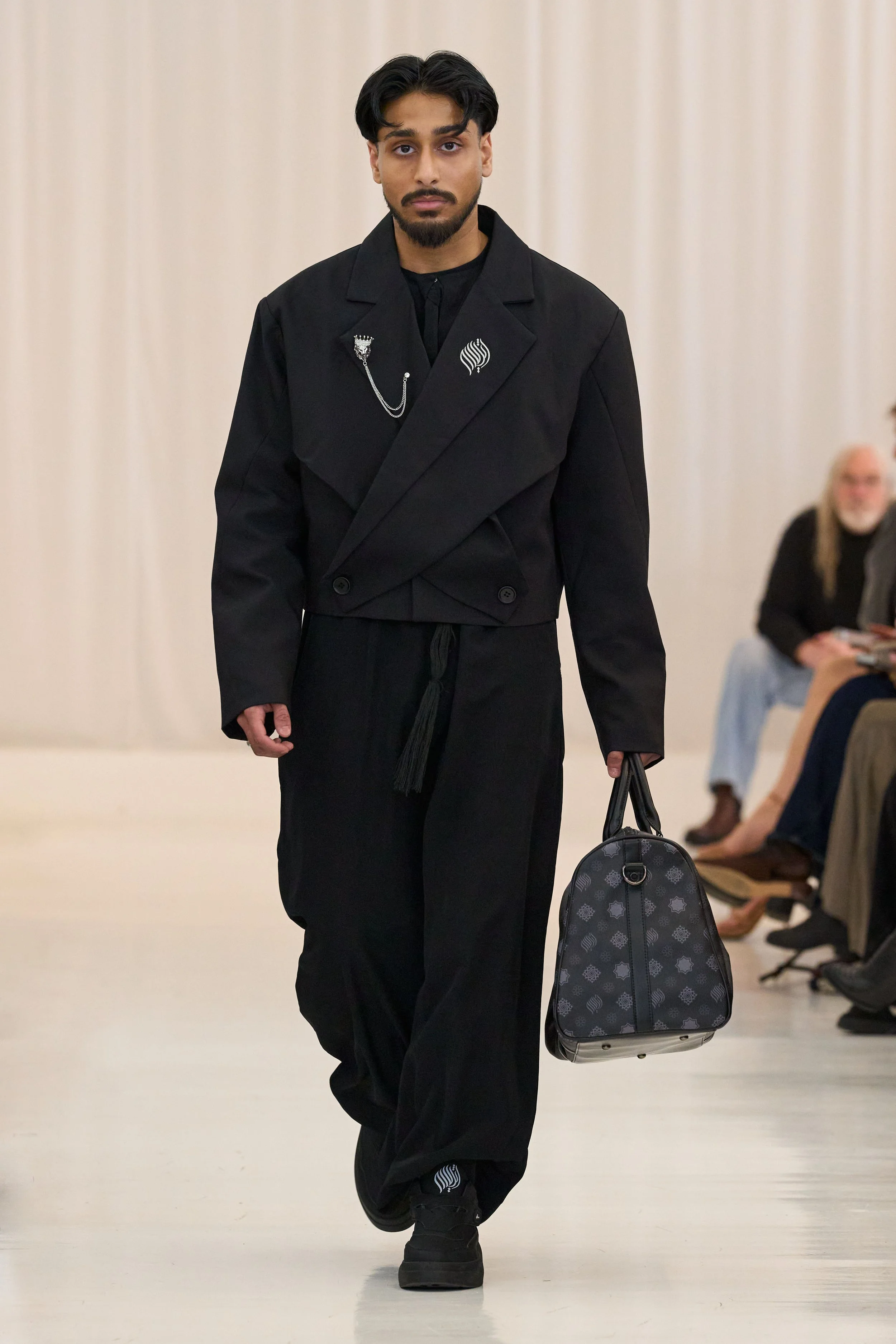
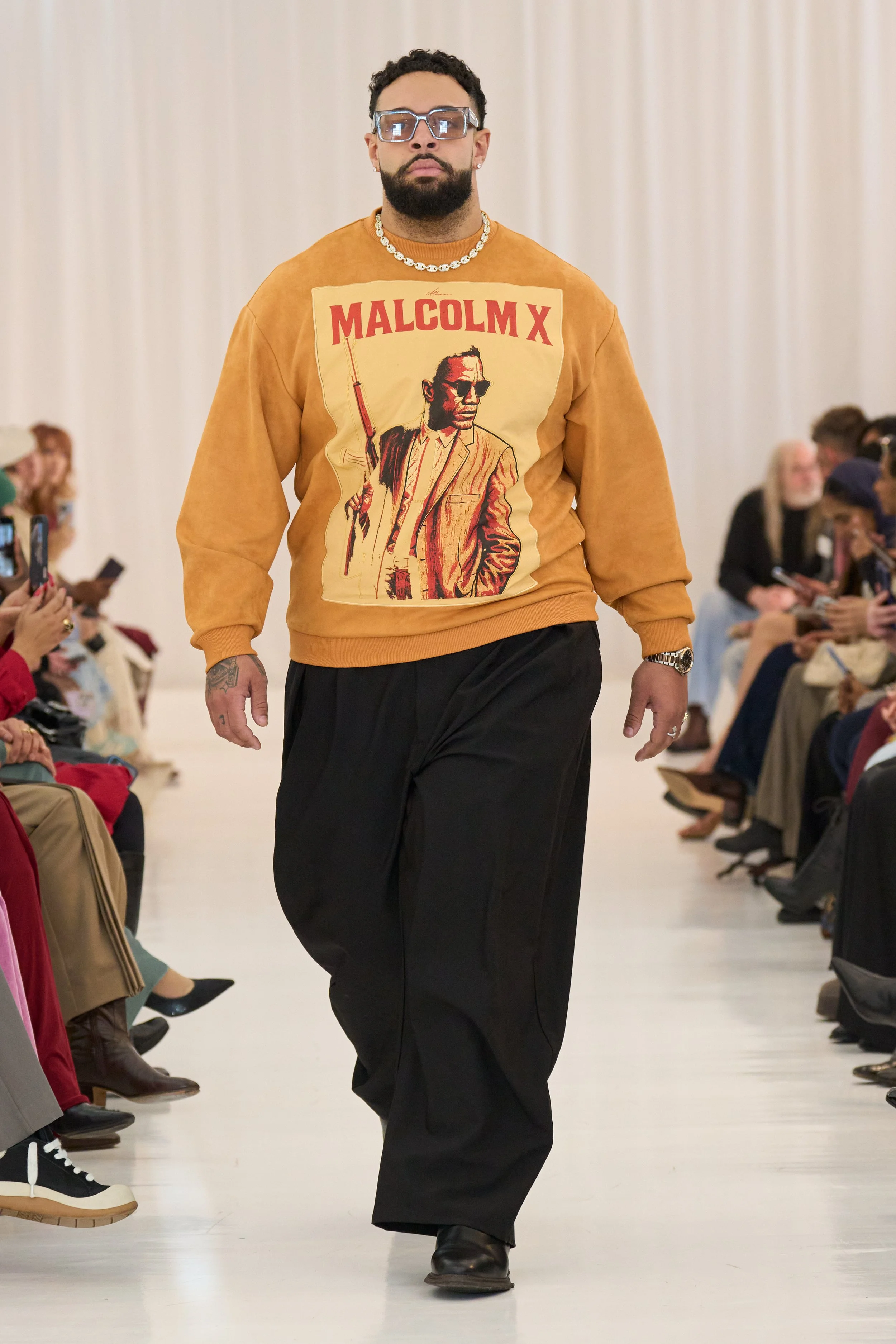
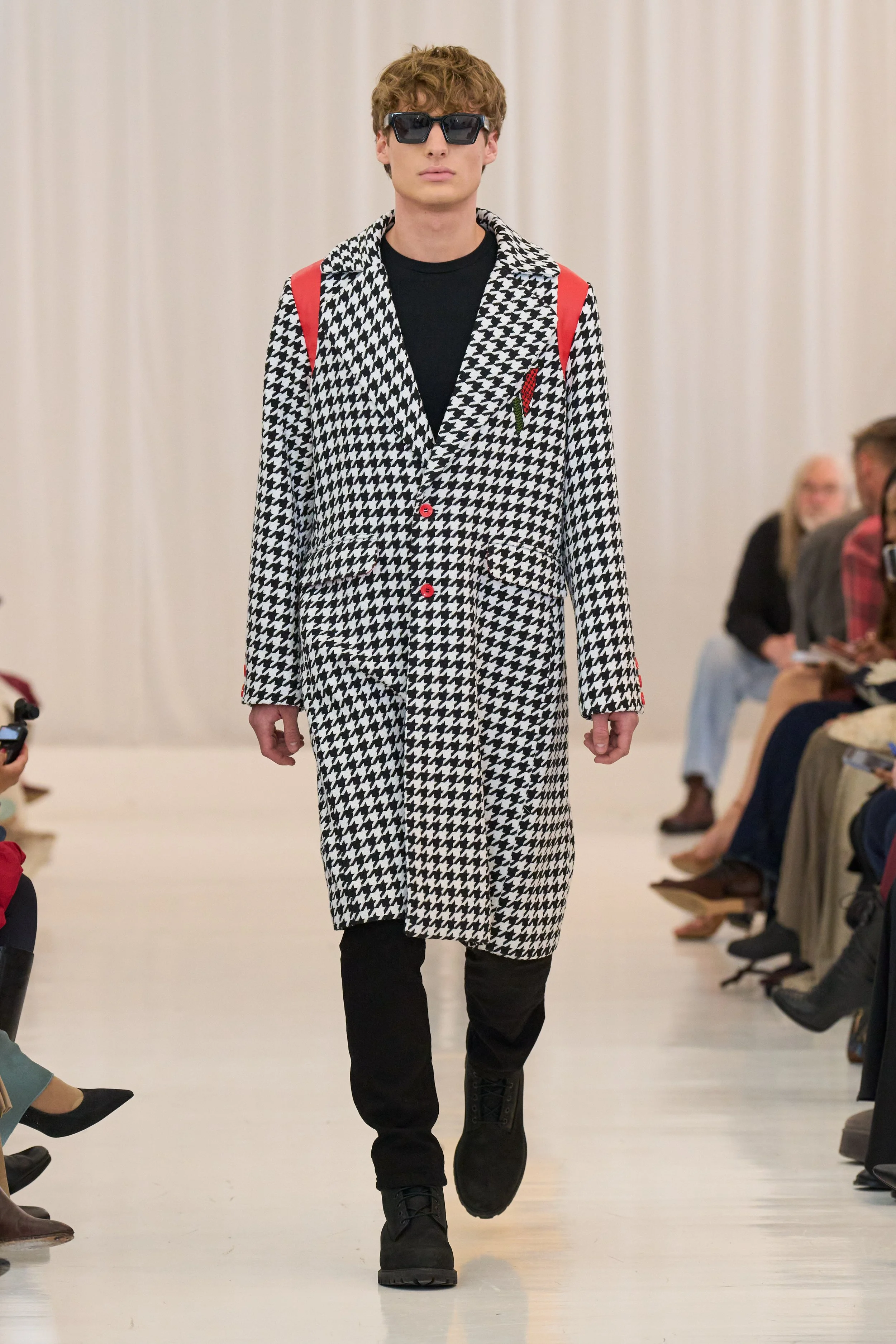
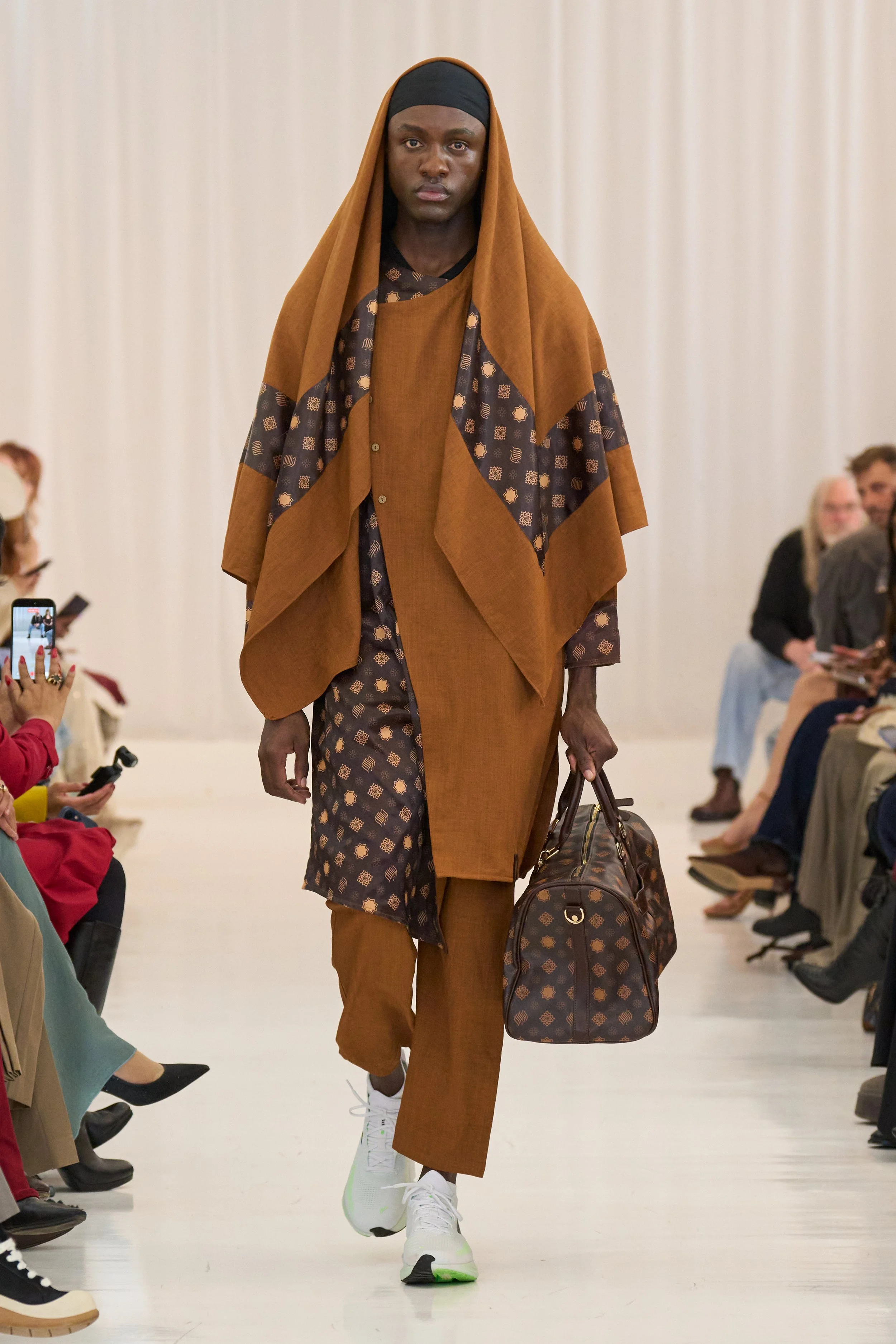
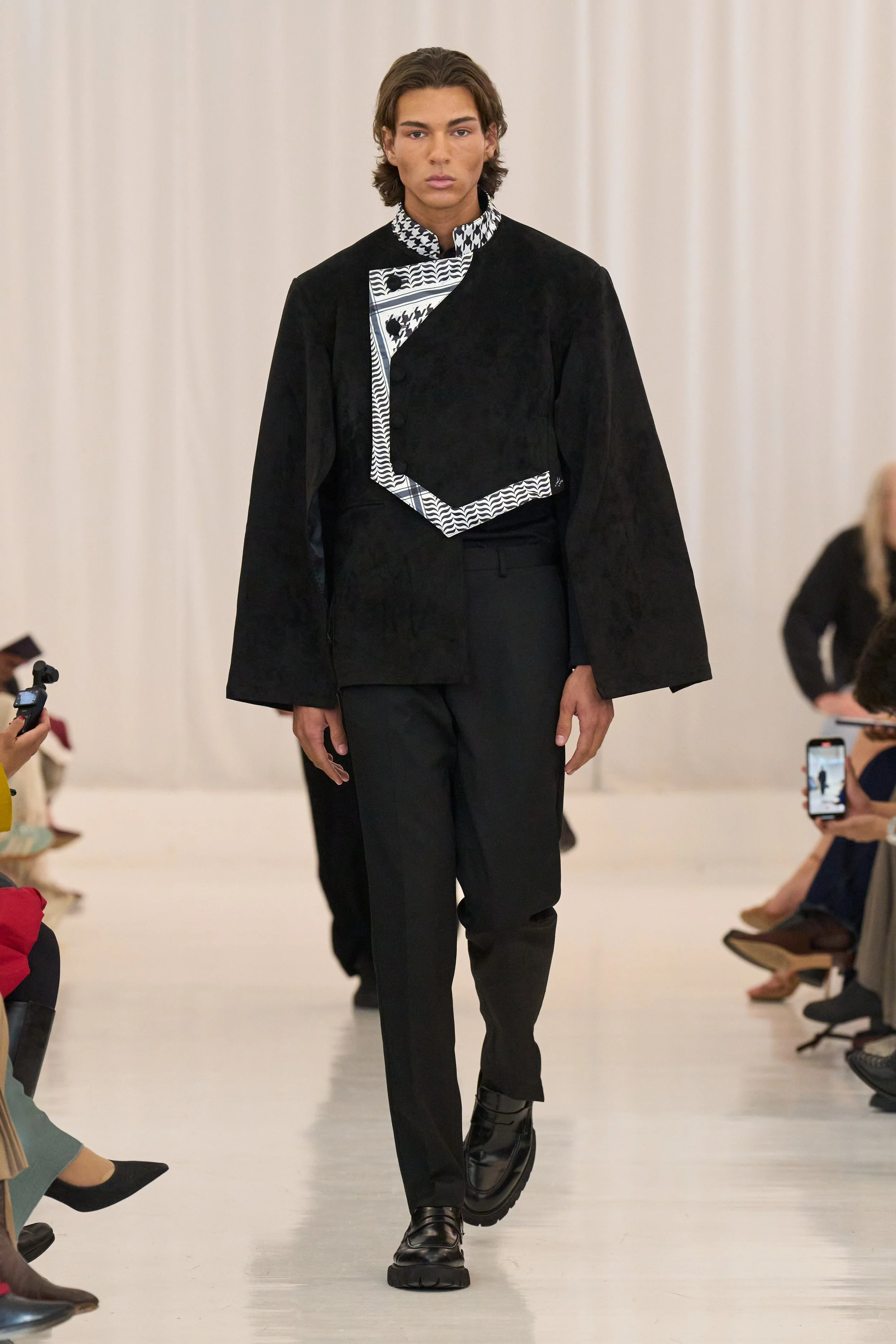
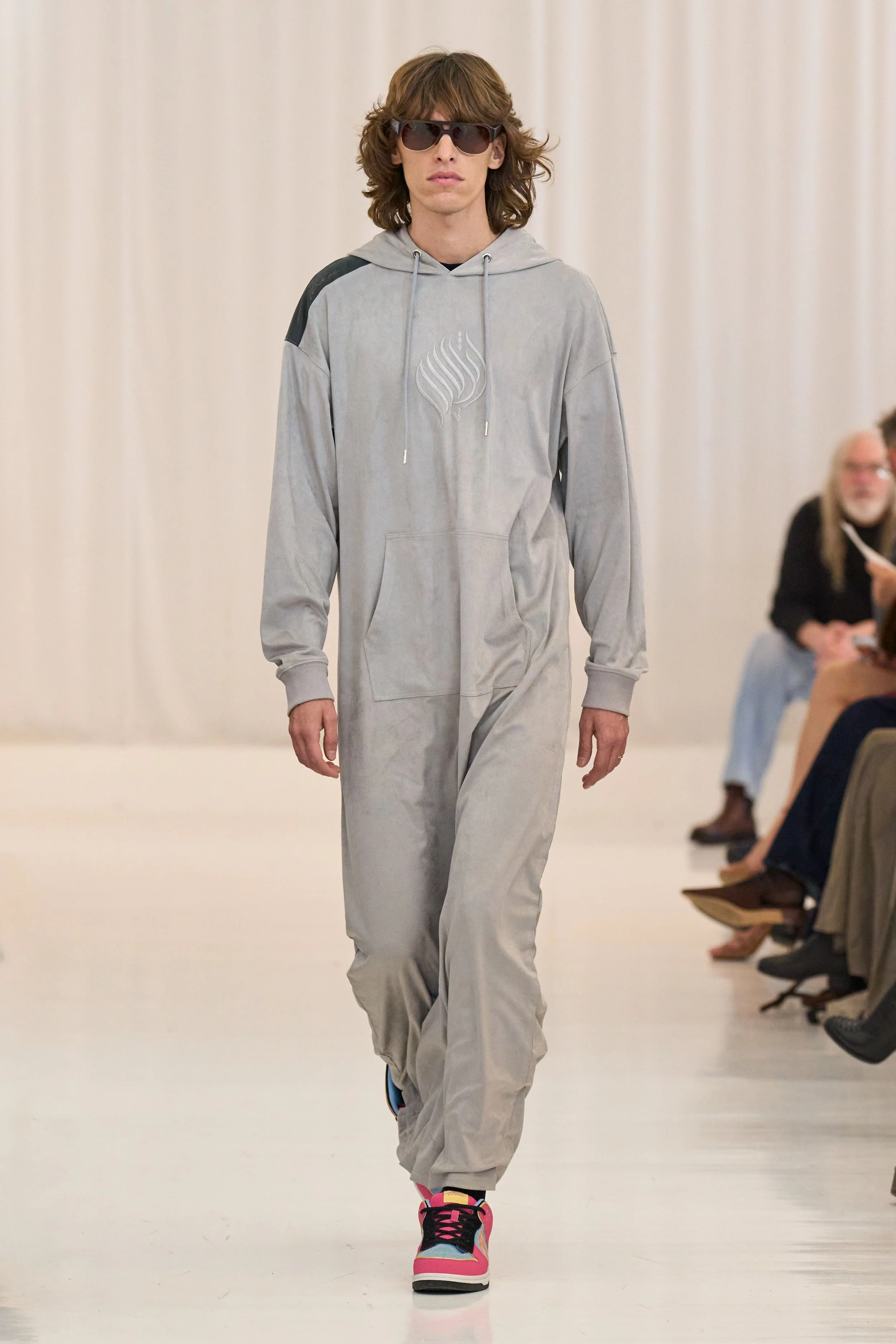
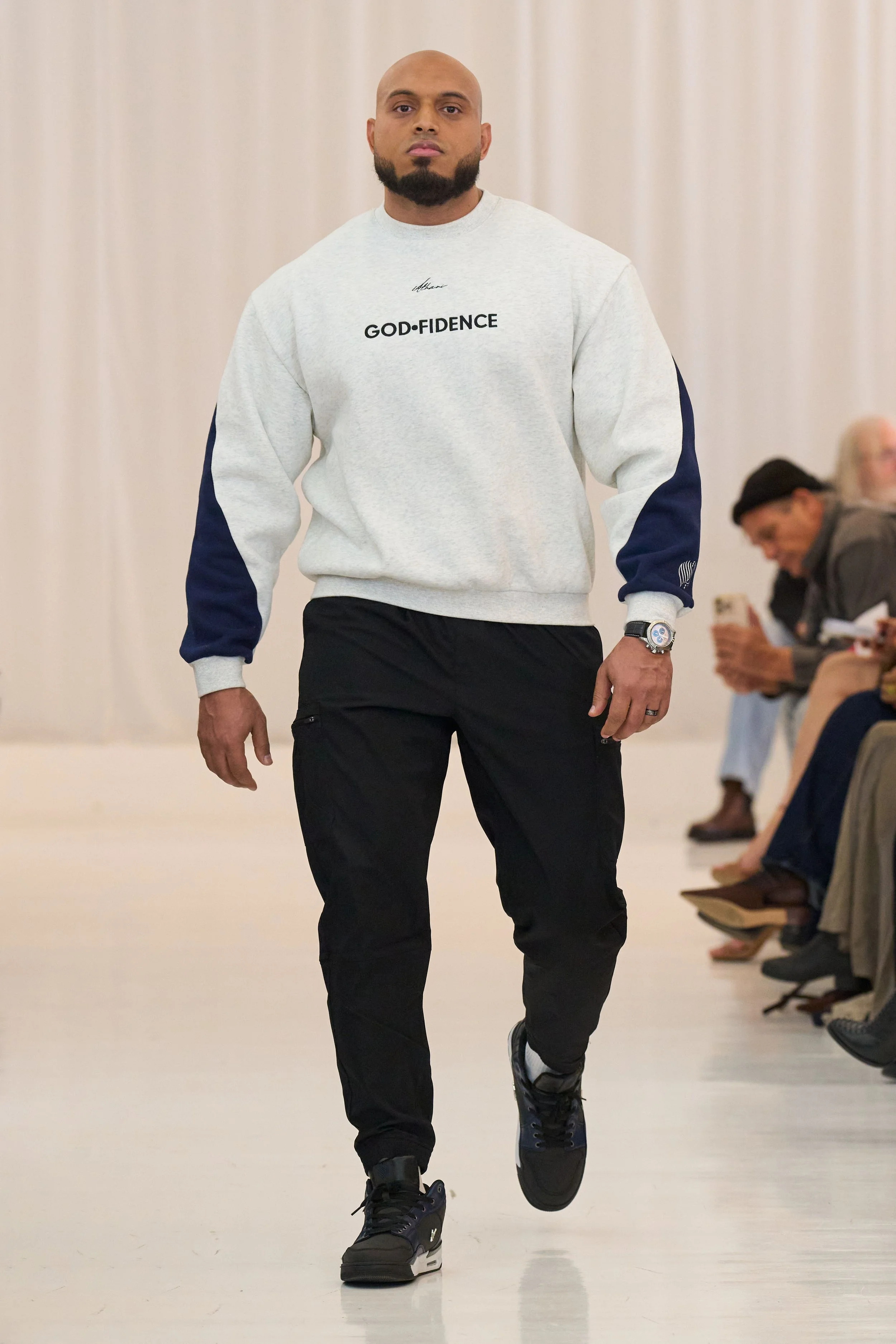
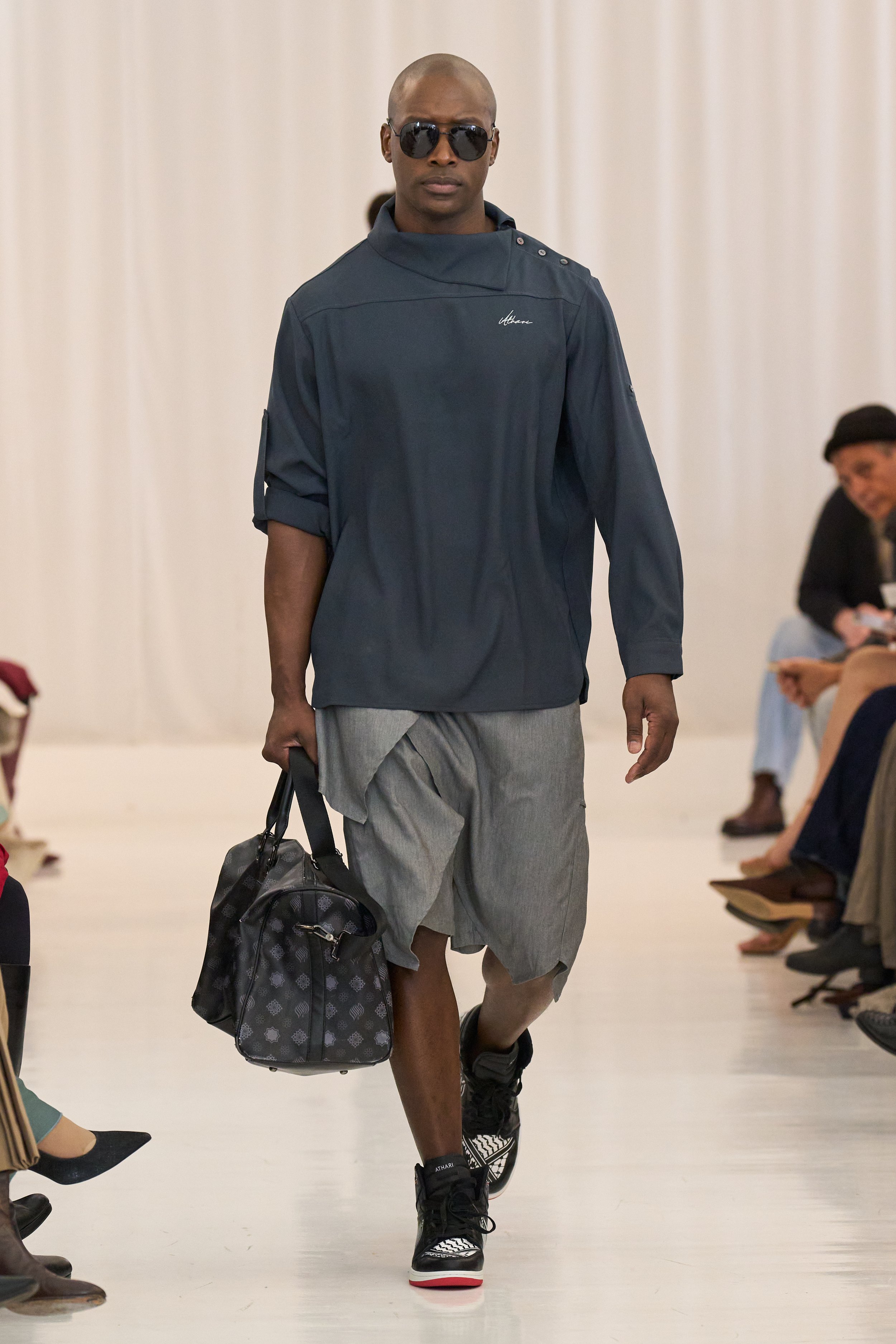
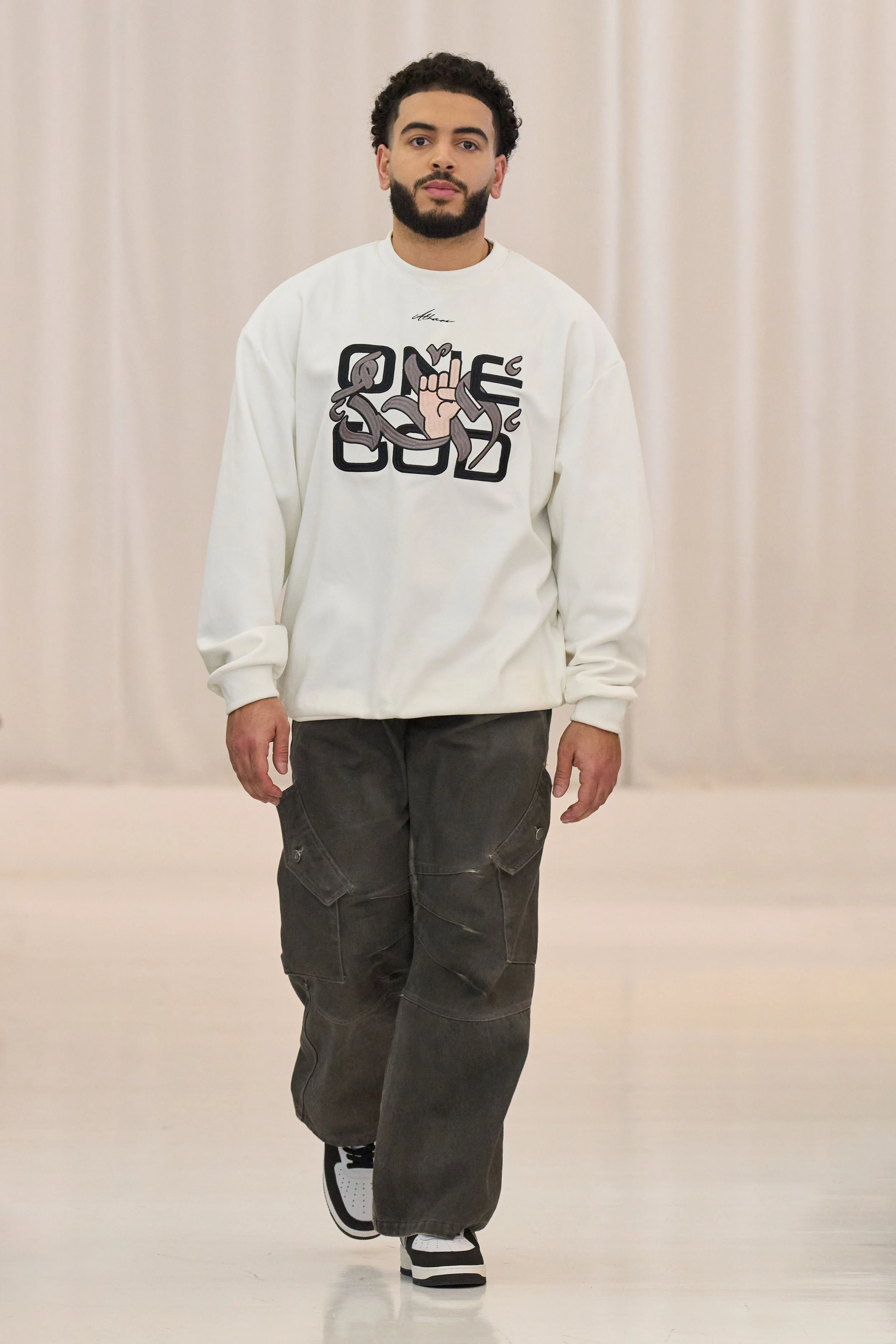
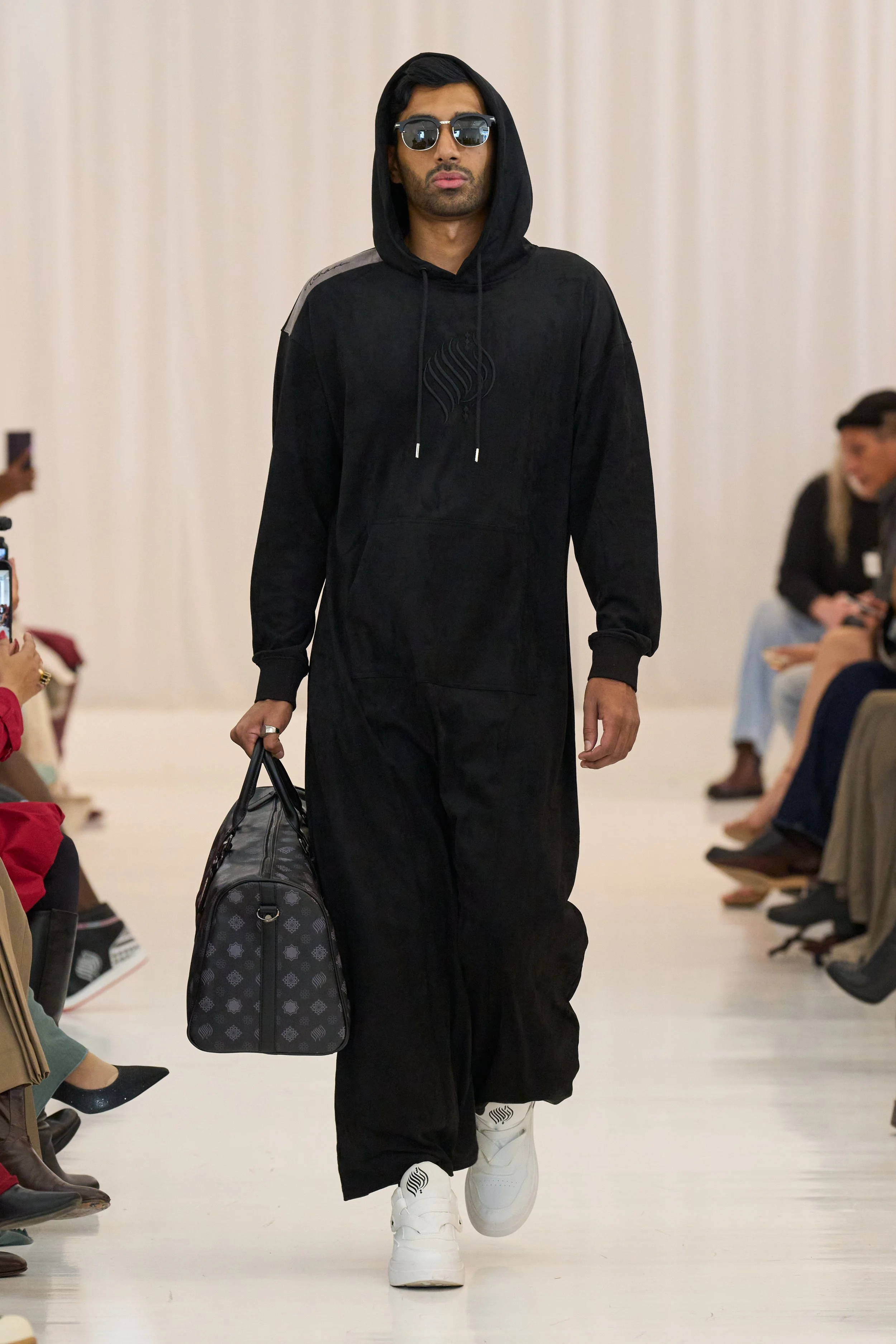
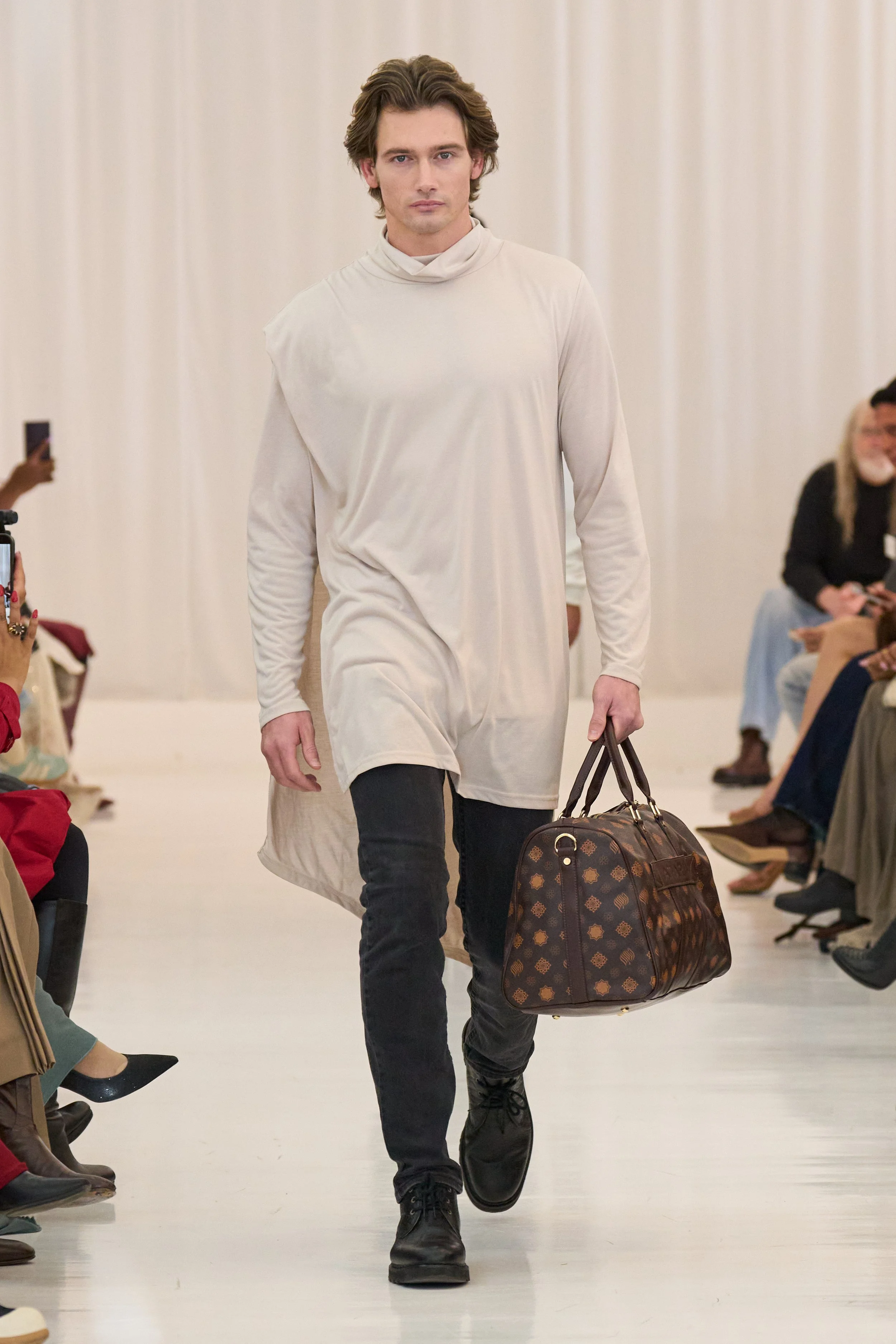
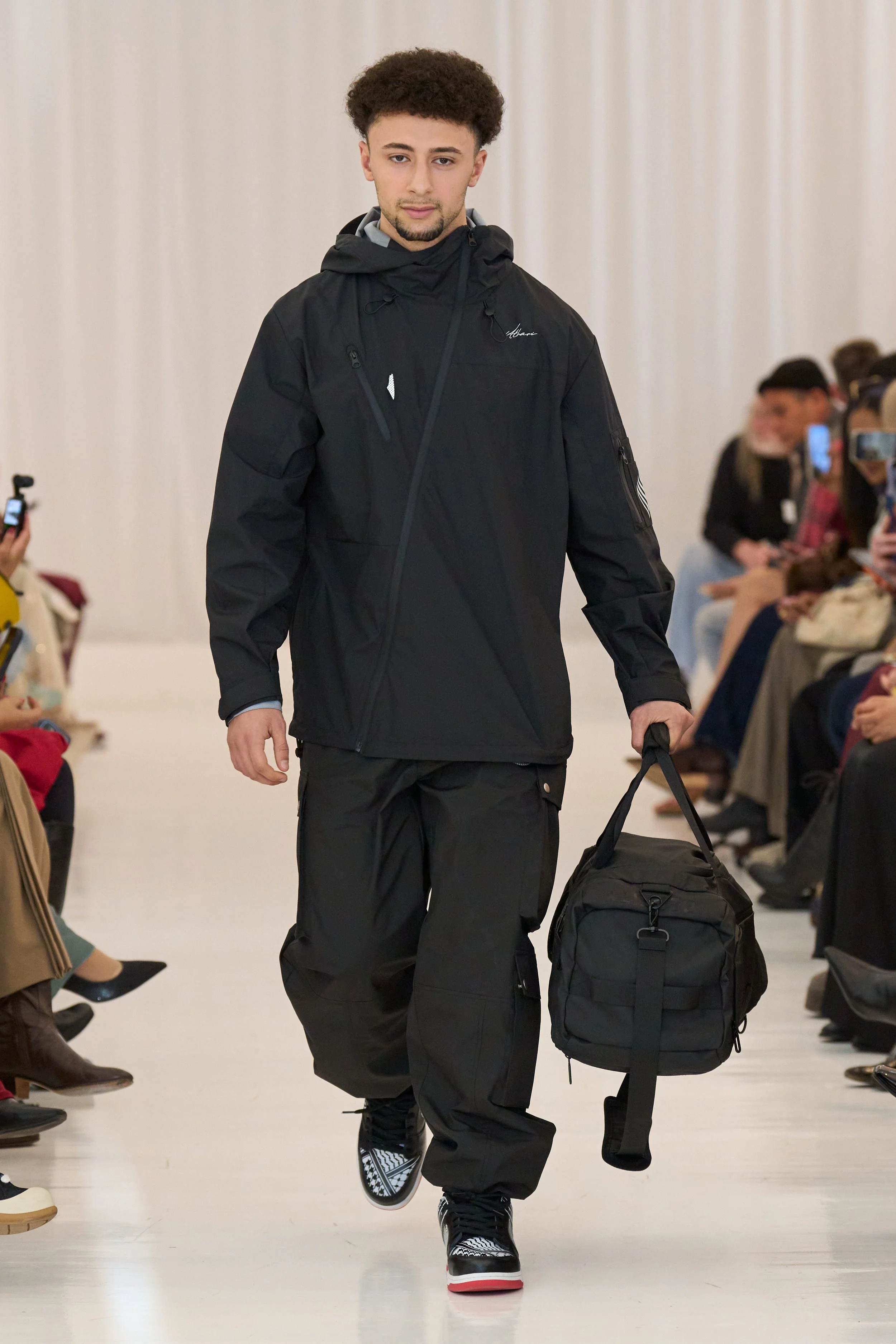
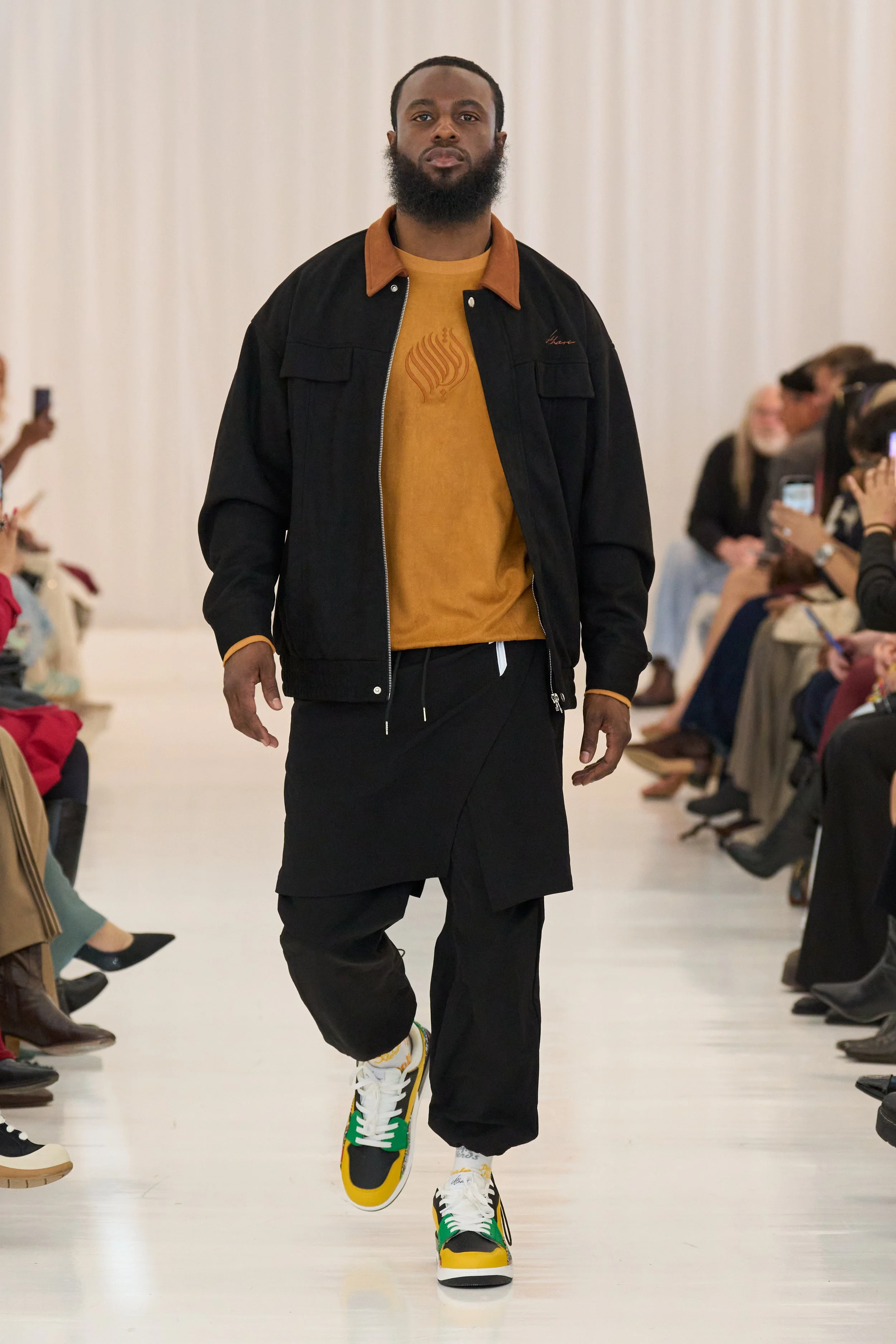
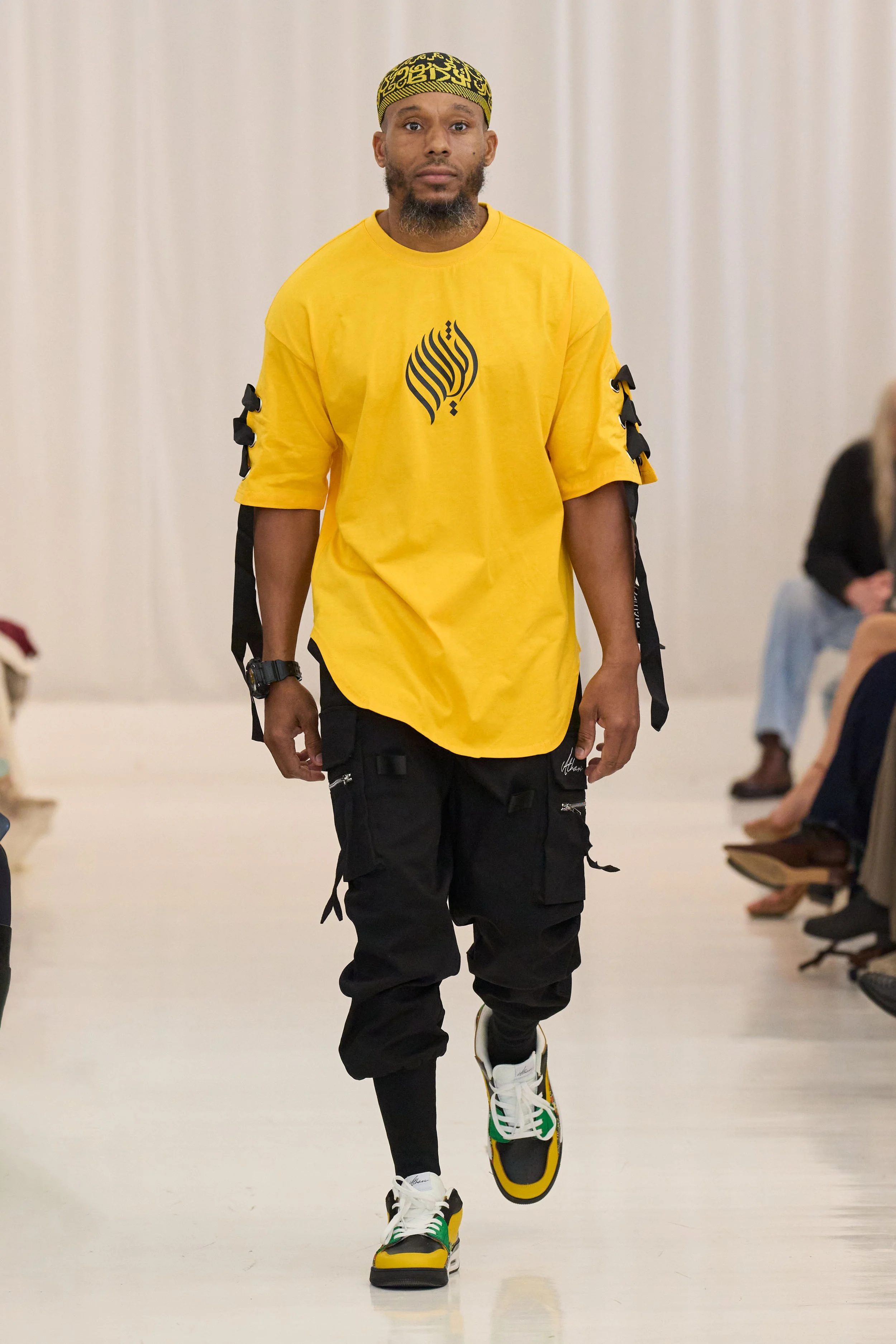
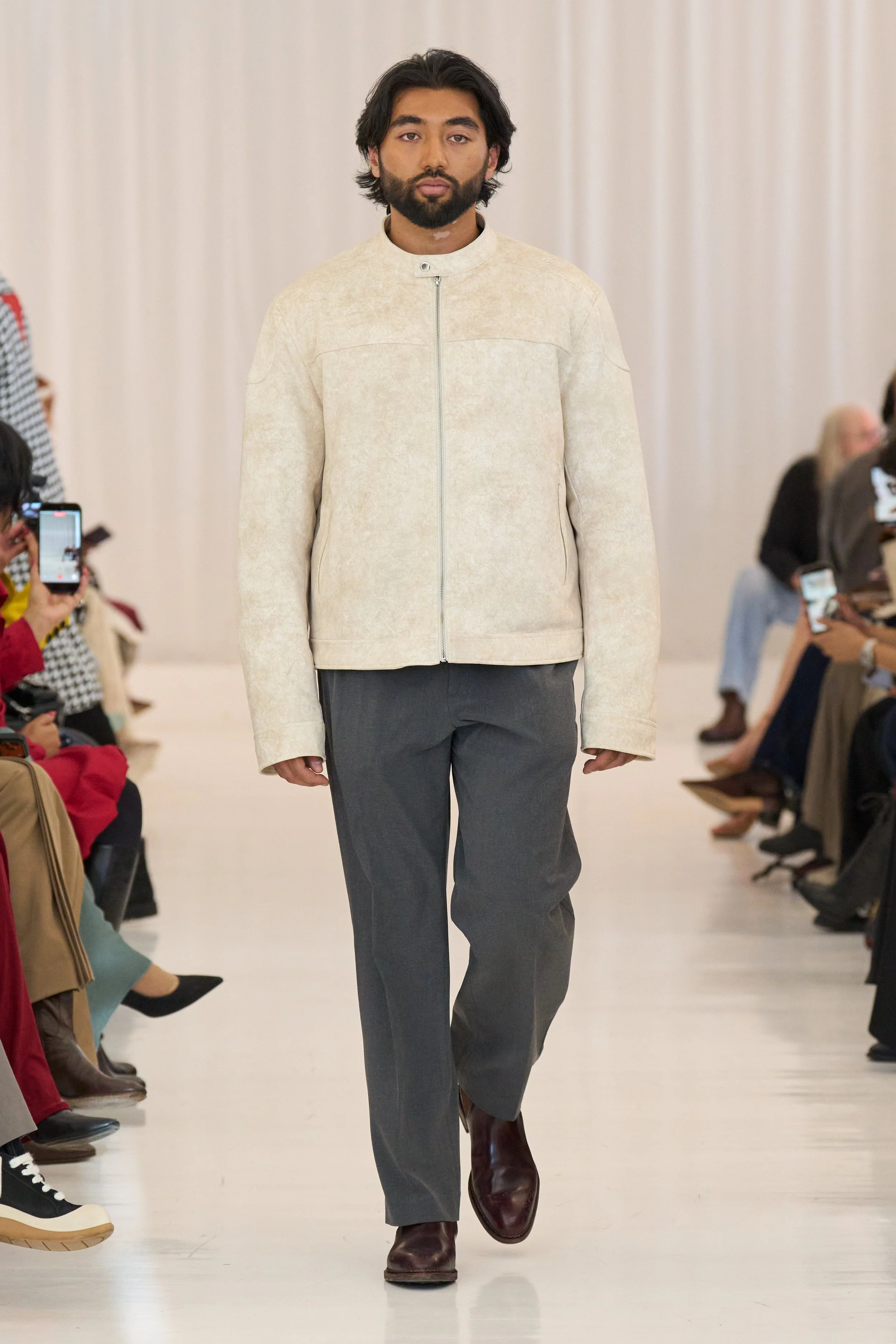
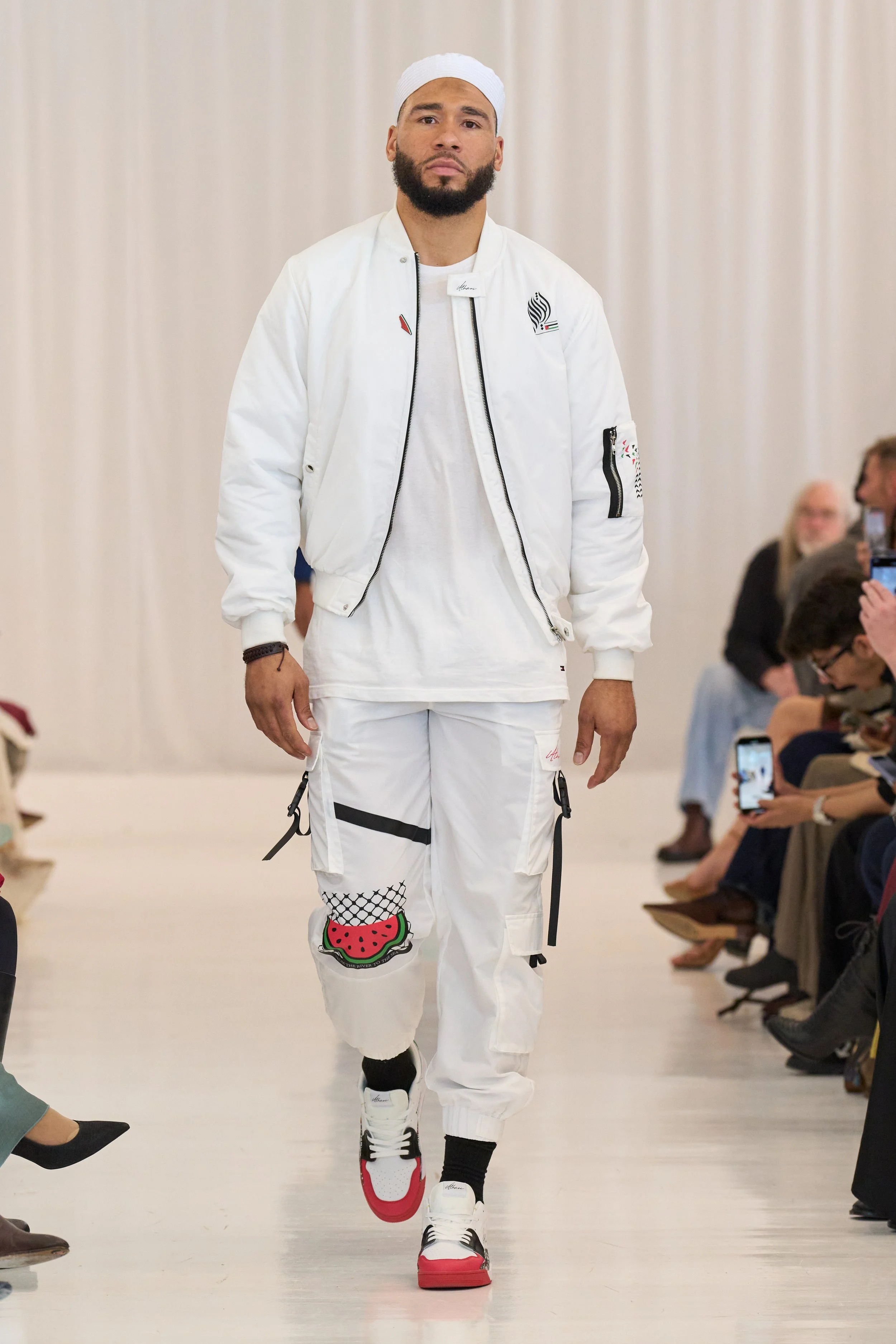
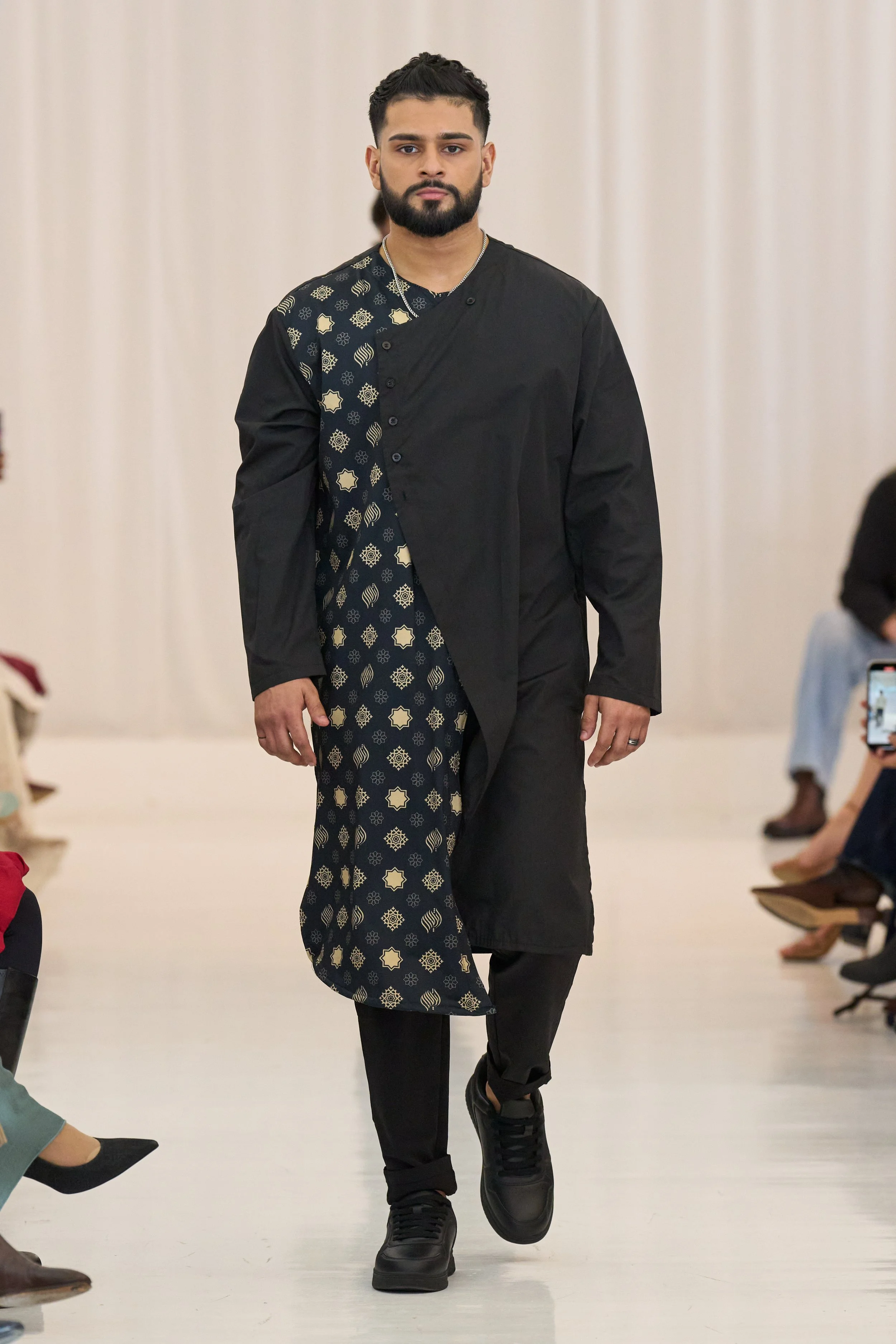
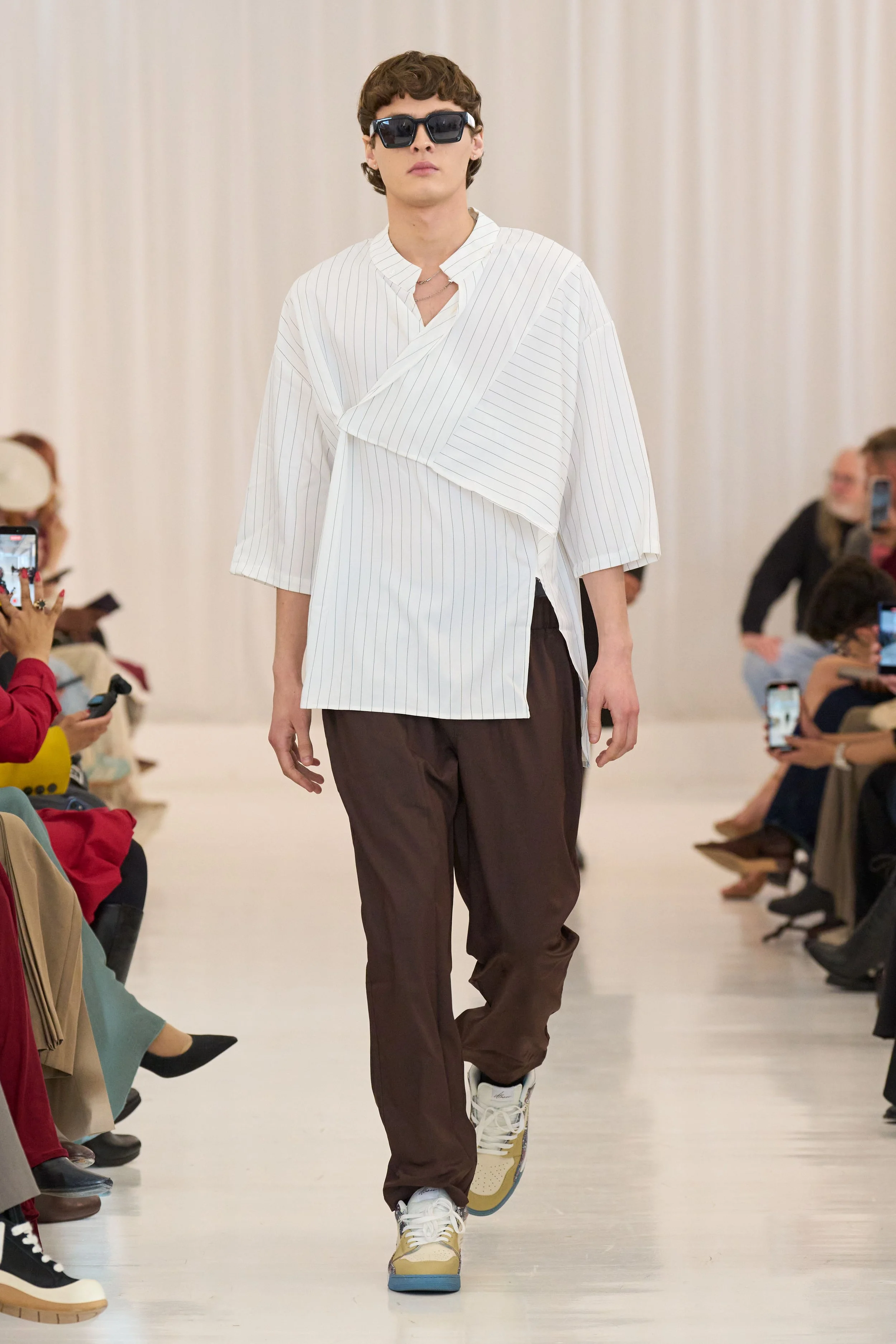
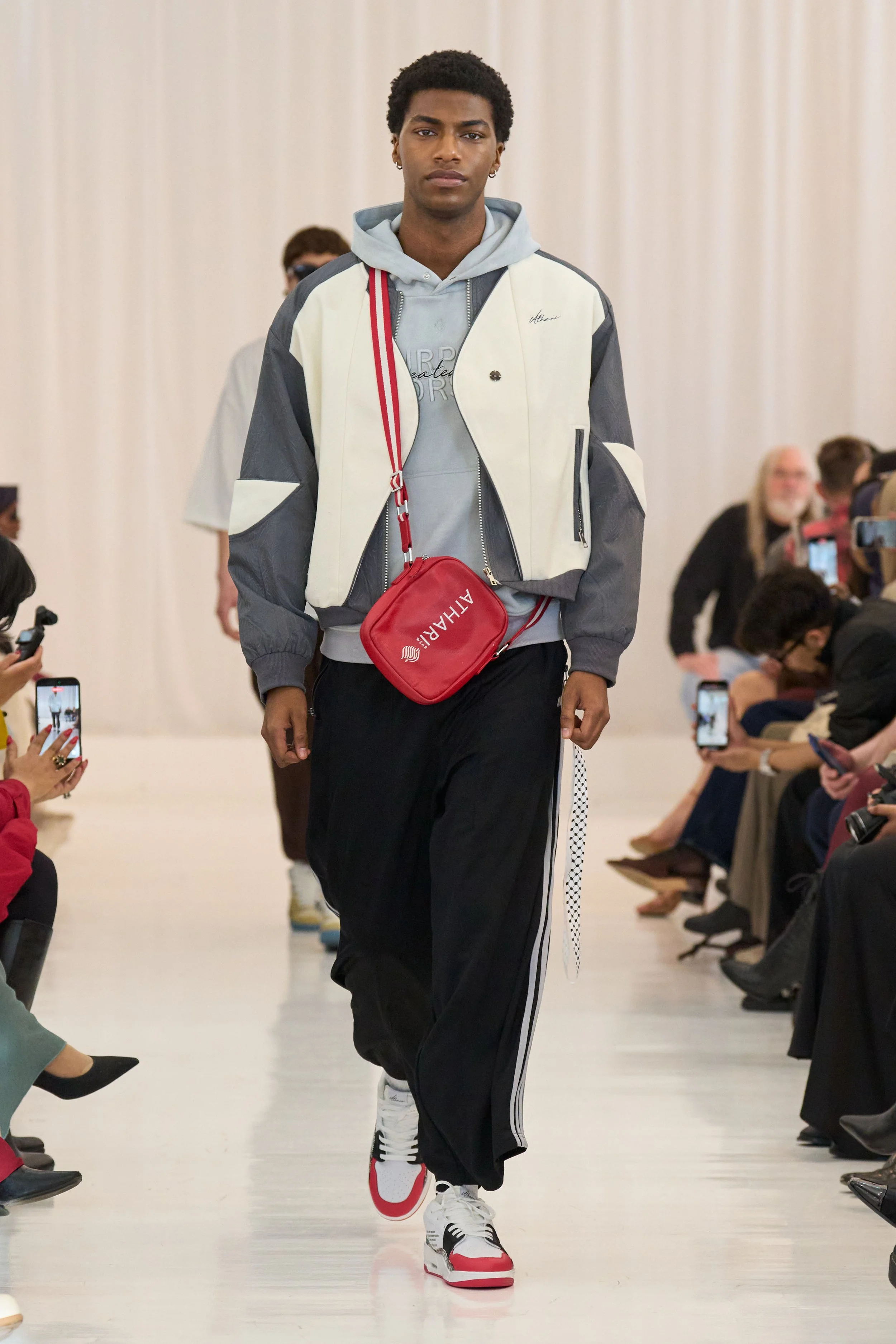
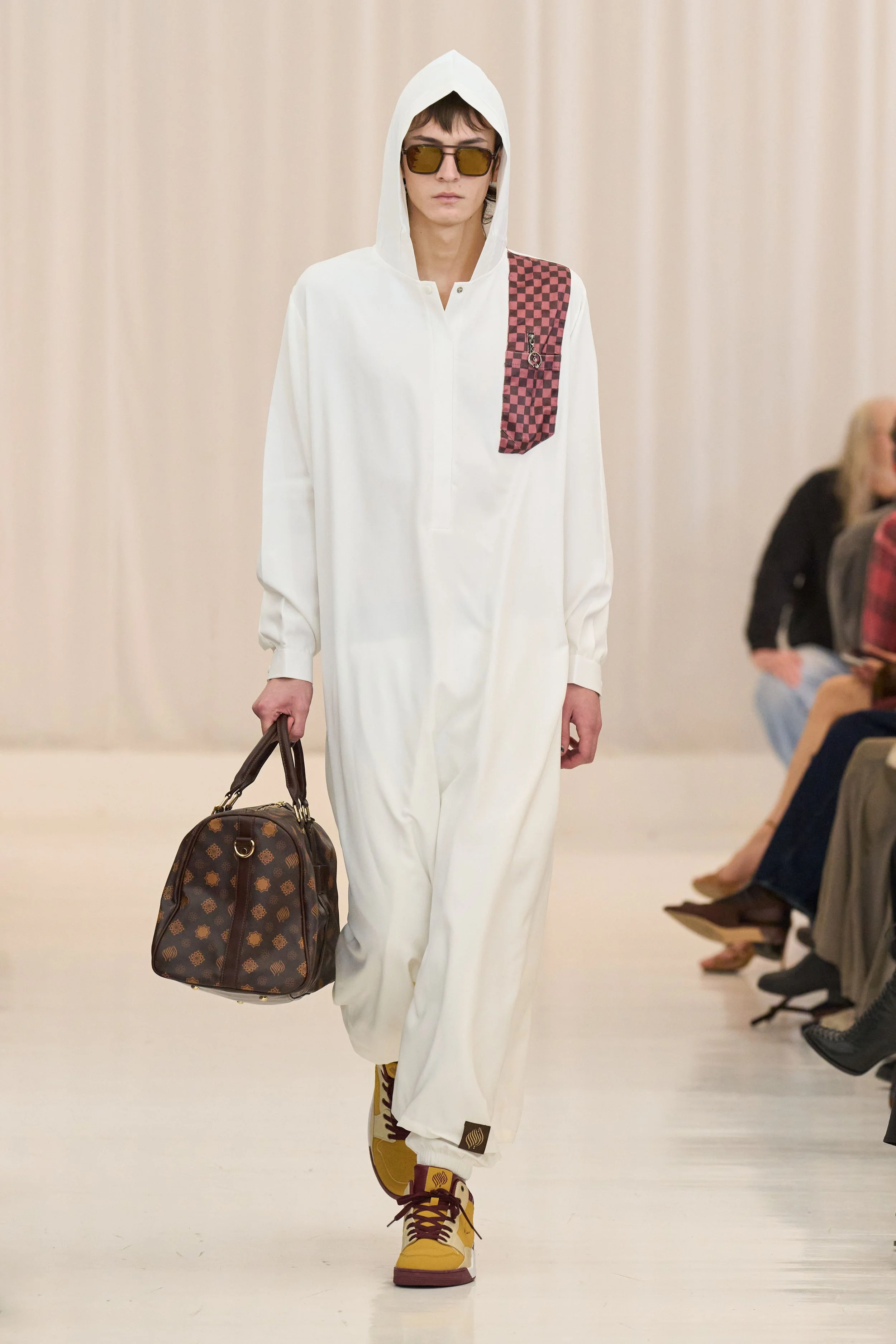
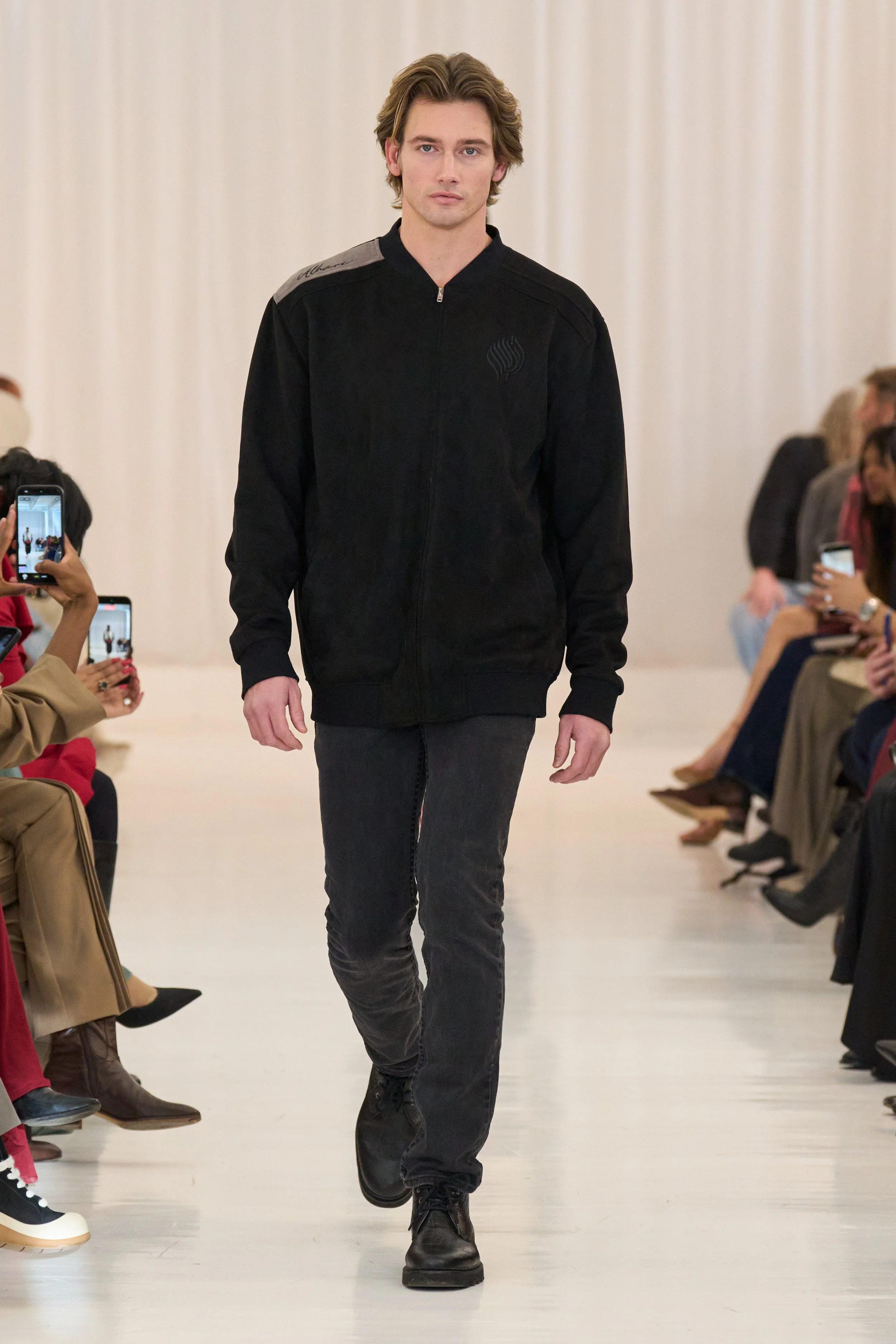
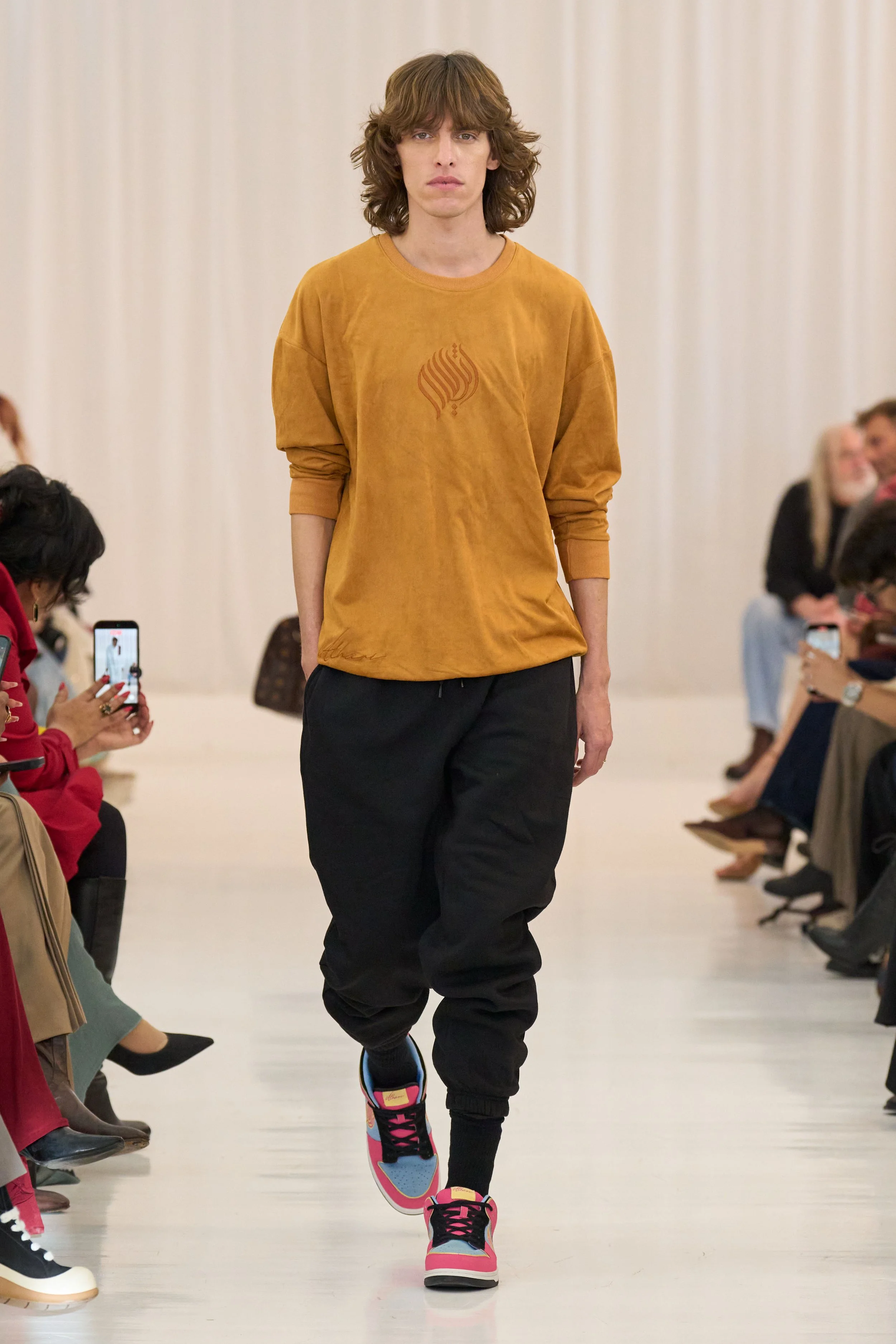
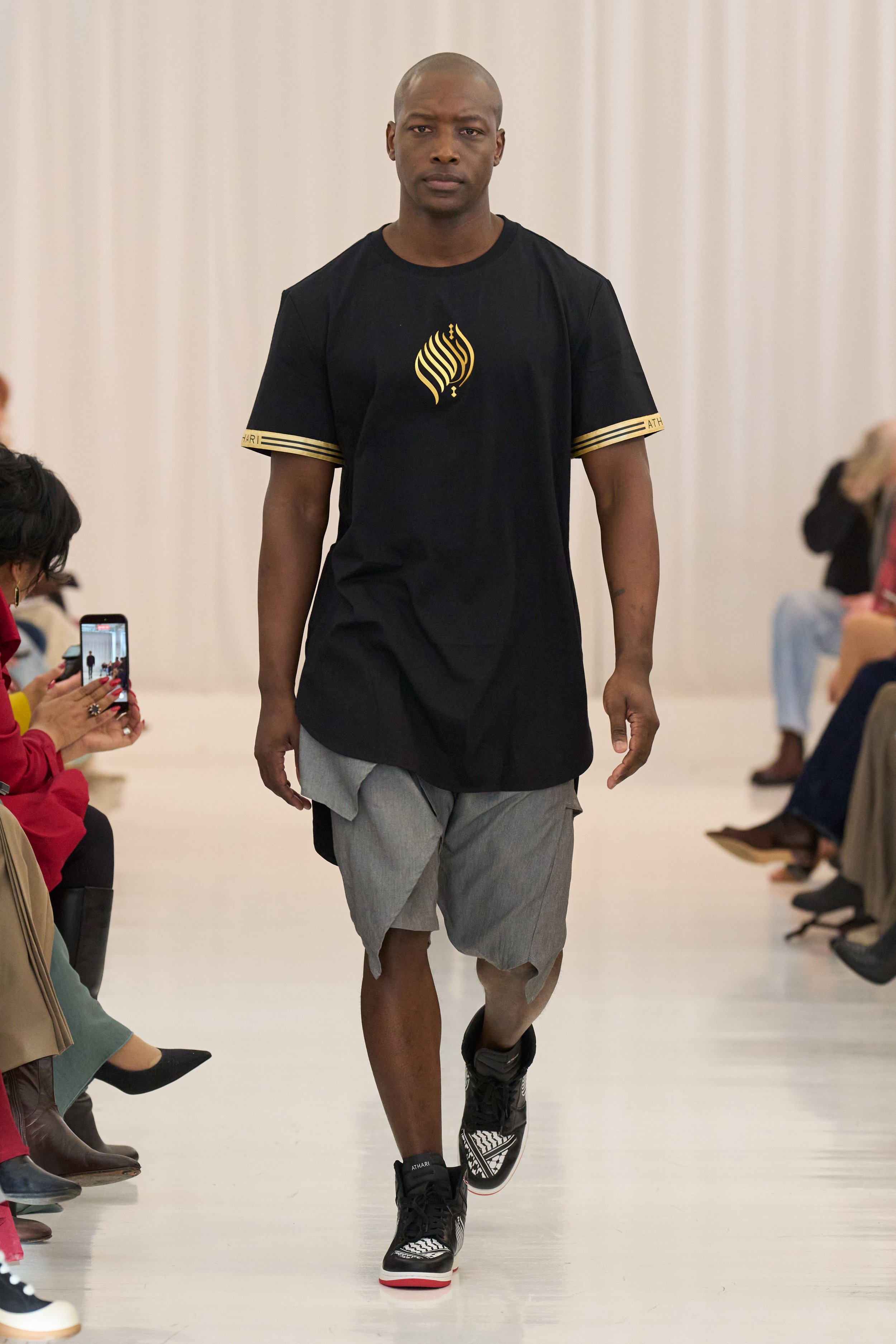
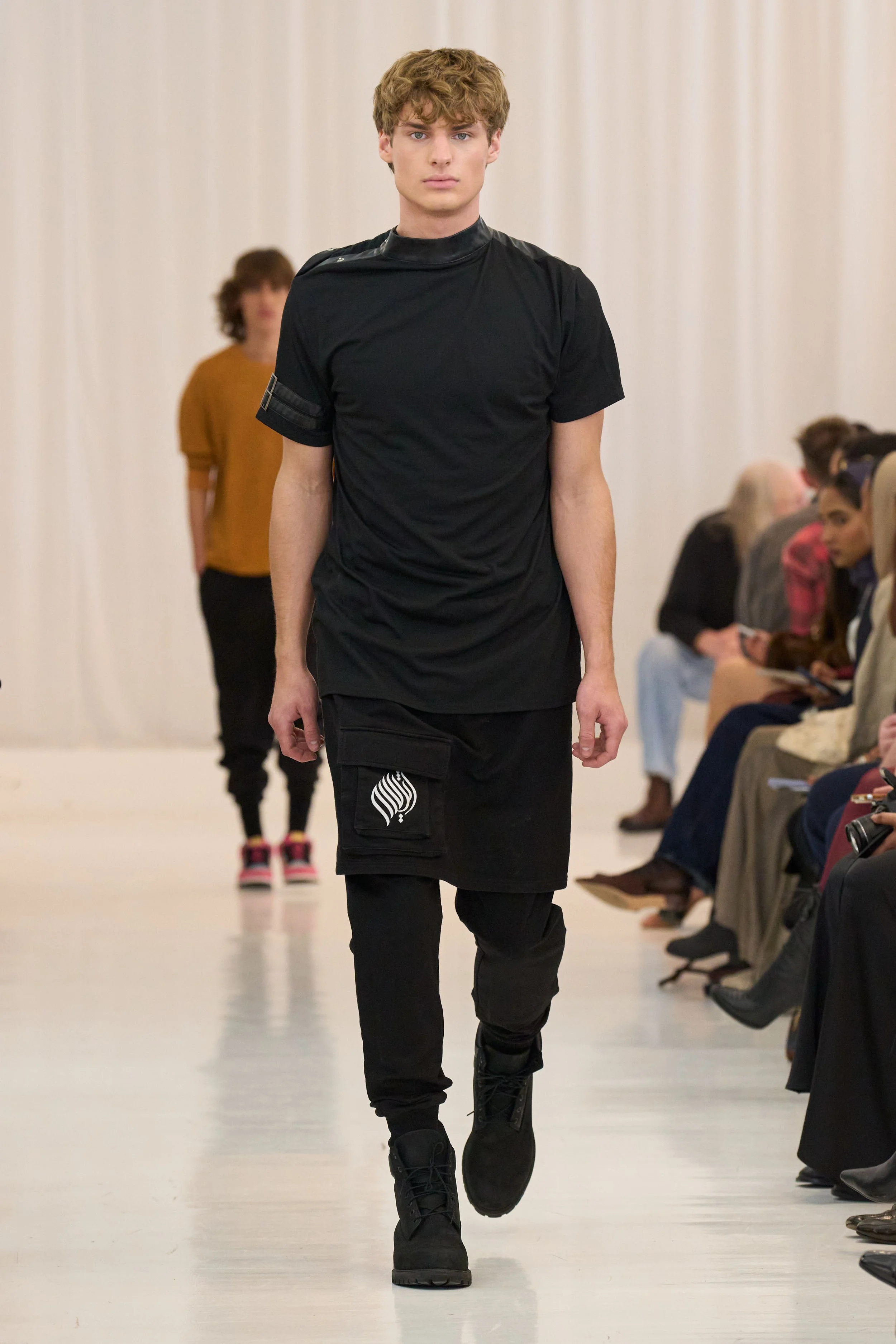
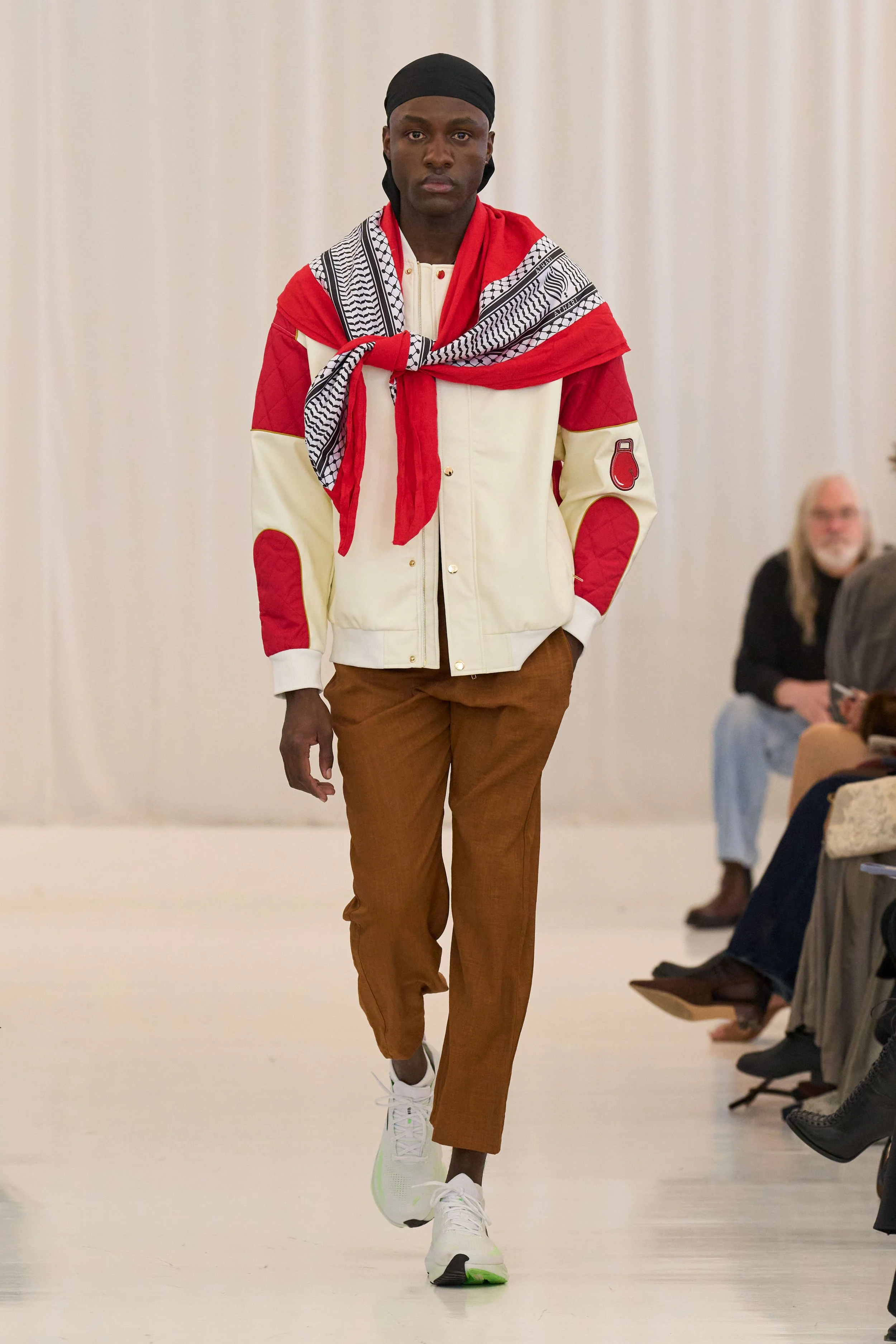
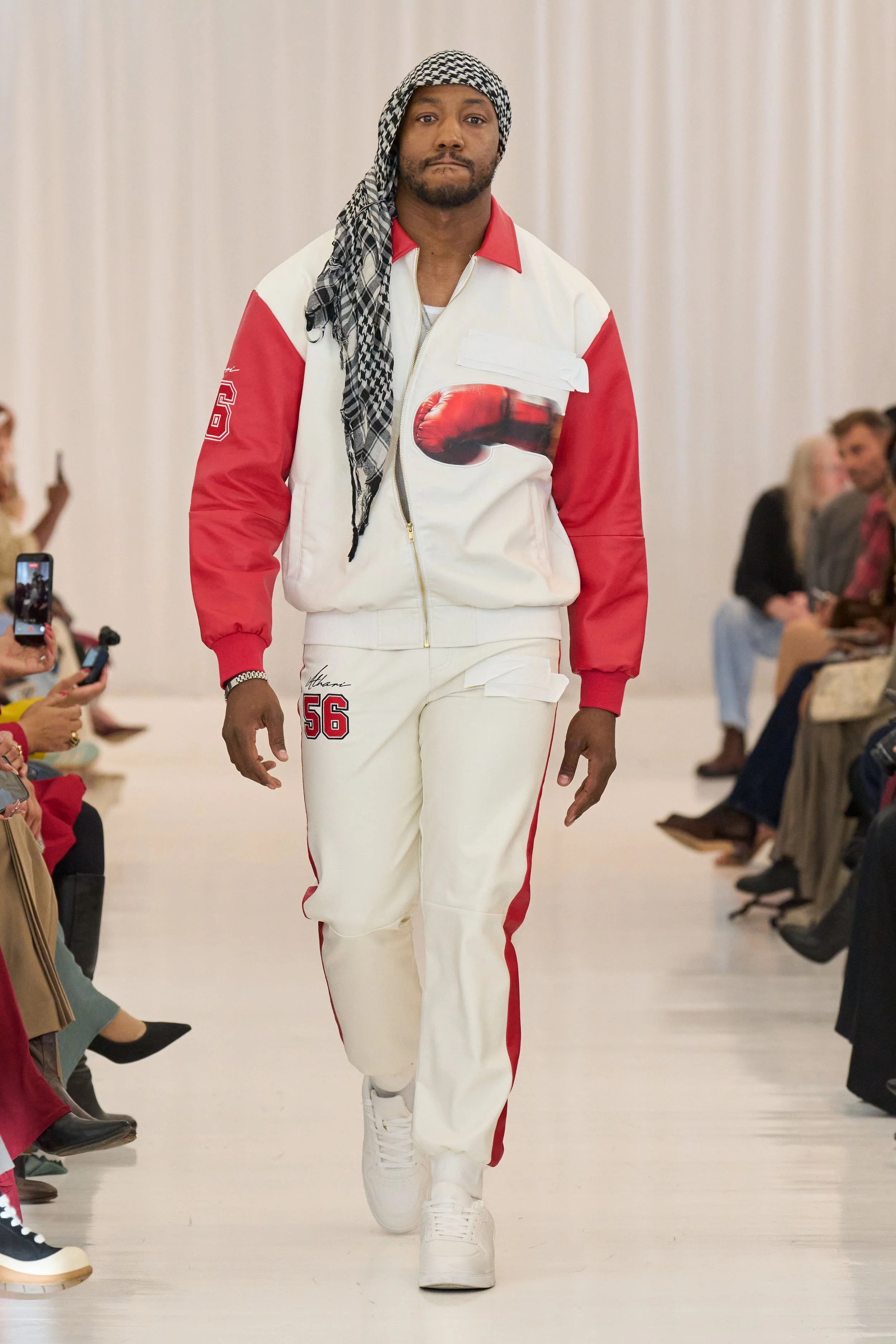
The segment closed with Fatmah Muhammad, owner of Knafeh Queens (who provided post-show treats for guests), in a satin-pink tracksuit and crown, a keffiyeh draped over one arm.
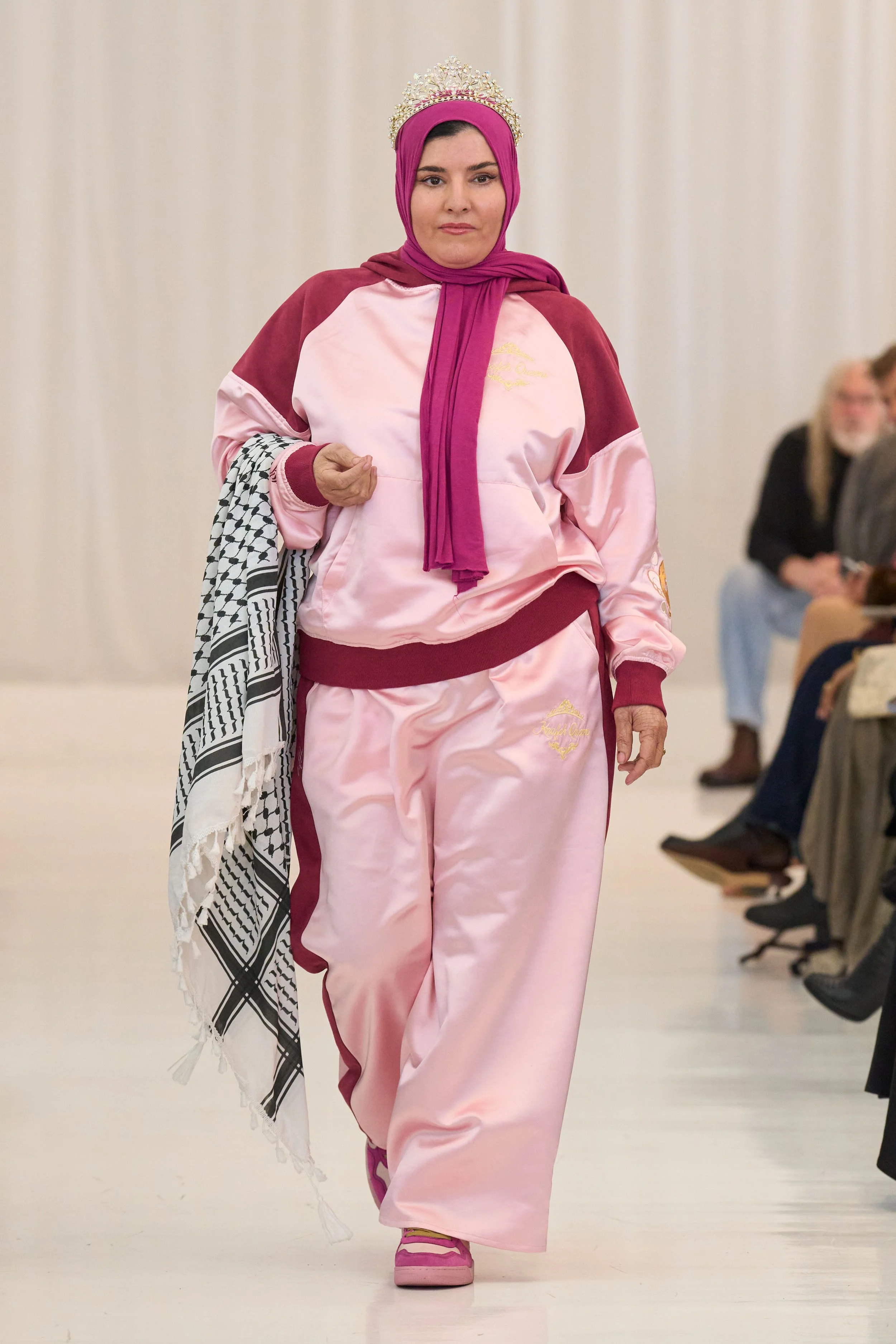
Fatmah Muhammad closes the segment. (Image: Launchmetrics Spotlight)
RUNWAY REACTIONS
After the show, guests and organizers reflected on the weight of the moment. Audrey Chéry, a digital creator, appreciated seeing modesty represented from within the Muslim community rather than through a Eurocentric Western lens. “Modesty is not just for the Muslim community,” she noted, praising the organizers for opening the space to the broader fashion industry.
Others found the show’s political transparency refreshing. “Using fashion as a voice, a vehicle to say something, is incredibly important,” said costume designer Geri Jeune. Stylist Rozzy Khan Changani agreed, noting that while powerful industry players often stay silent on global issues, this show chose to be “loud” about its values.
“In this industry, Muslim modest wear—hijabs, abayas—is constantly questioned, whereas other faiths are often given a pass under the guise of religious tradition,” Changani remarked. “This show is creating history in the present, and Athari sent a powerful message that this double standard needs to change.”
The sentiment of spiritual authenticity was echoed by guest Issra Tobah, who observed, “So often in Western societies, you have to dilute your faith, but in this show there was a clear presence of God.” For content creator and model Zubair Mohammed, the show was about long-awaited visibility: “I’ve been attending fashion shows for seven years, and I’m exhausted seeing people of color only as a diversity check. It’s high time we come together in this space.”
Co-founder of Modest Now and one of the show’s organizers, Fatima Younus, emphasized that this debut is just the beginning. “This was more than just a fashion show,” she said. “There is value for modest designers to be in this space; there is value in being seen.”
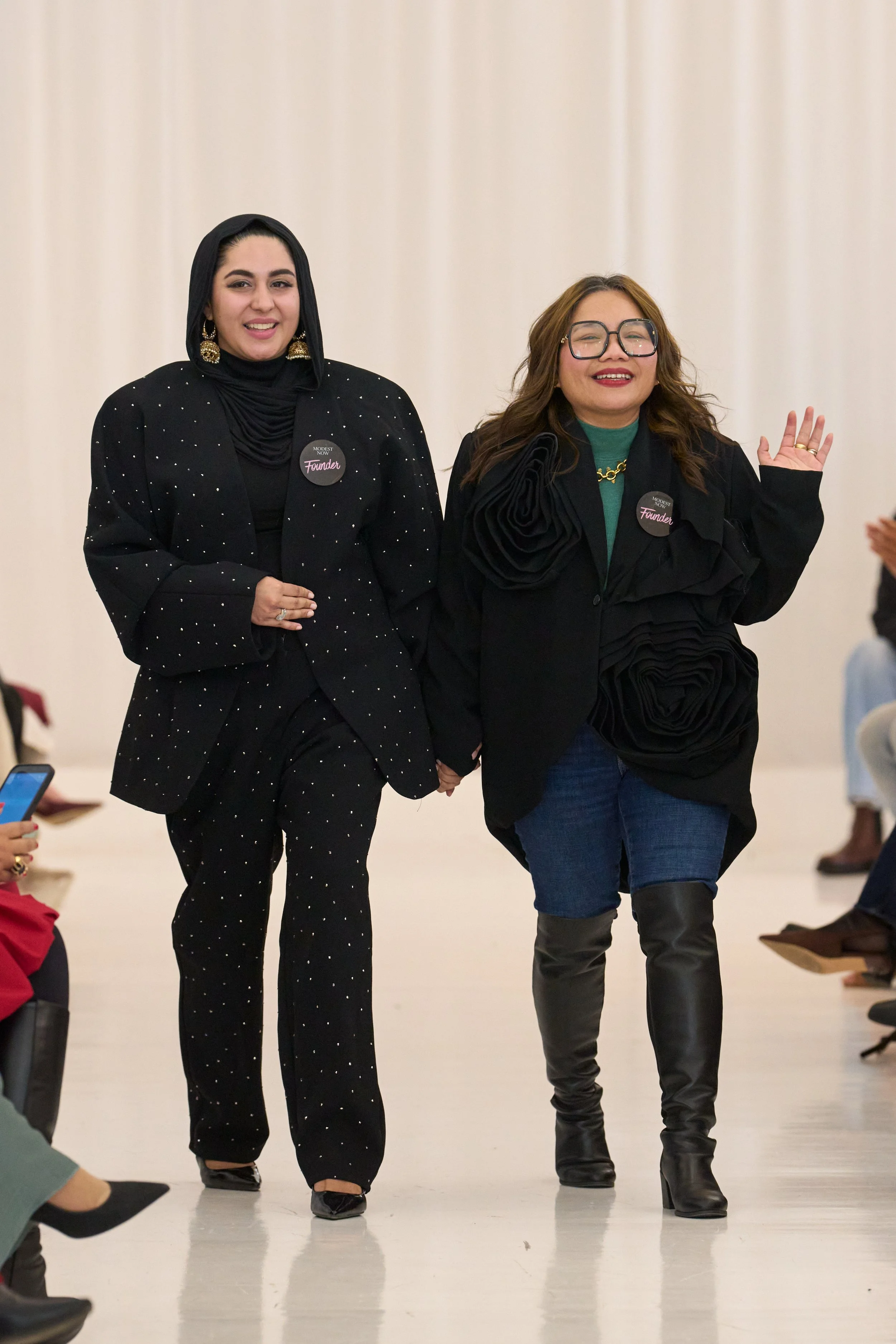
Fatima Younus & Dina Barber, founders of Modest Now. (Image: Launchmetrics Spotlight)
The arrival of American Muslim designers at NYFW is a landmark moment. While modest fashion is for everyone, regardless of faith, it has long been anchored by the Muslim community. By presenting on a global stage, Amariah and Athari Wear are bringing their narratives to the forefront and inviting the larger fashion community in.
For Athari Wear, specifically, the focus on Palestine struck a deep chord. It served as a reminder that fashion is never just fabric on skin; it is a statement that we choose to make with every dress, jacket, or shoe we wear.
DESIGNERS:
Maryam Amaria (Amariah)
amariah.co
@amaria
Islam Mohamed El-Hoseiny (Athari Wear)
athariwear.com
@athariwear
ORGANIZERS:
Modest Now @modestnow.theshows
Muslimi (Title Sponsor)
muslimi.org
@muslimi.official
Images courtesy of Launchmetrics Spotlight